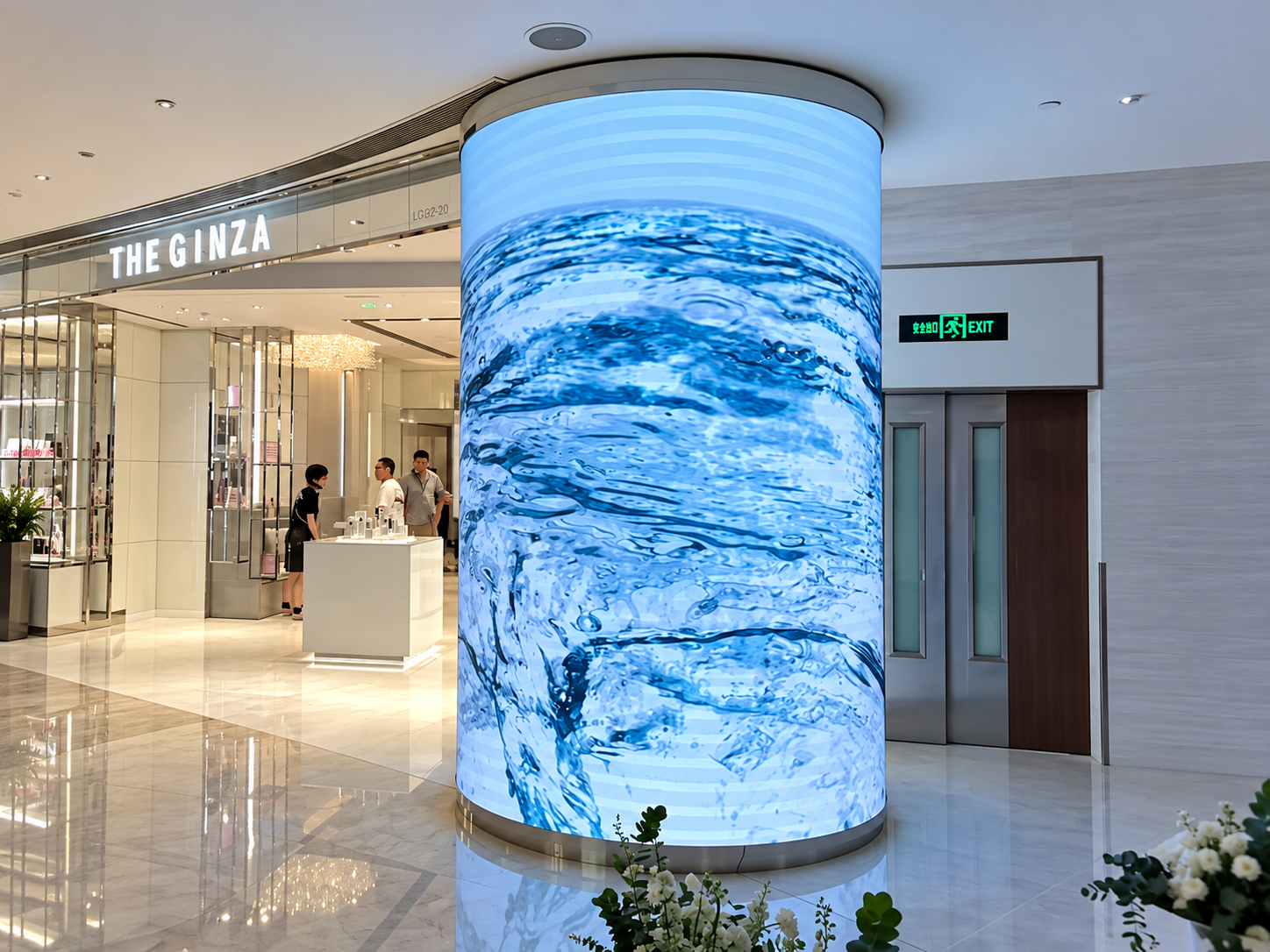
Creative LED displays can turn an ordinary corridor into a strong visual experience. They are increasingly used in shopping malls, hotels, museums, exhibition halls, entertainment venues and corporate buildings.
But a narrow corridor creates a special problem.
People are much closer to the LED screen than they would be in an atrium or open lobby. If the display is too large, too bright or filled with fast-moving content, it can quickly become uncomfortable rather than impressive.
For this type of project, the goal is not to make the LED screen as noticeable as possible. The goal is to make it fit naturally into the walking environment.
In an open space, viewers can choose how far they stand from a display.
A corridor removes much of that freedom.
Someone may pass only one or two meters from the screen. The display can also occupy a large part of the viewer's field of vision, especially when it extends along an entire wall.
This changes several design decisions:
pixel pitch;
screen height;
brightness;
content speed;
installation depth;
viewing angle;
maintenance method.
A specification that works well in a large shopping mall atrium may feel completely different when installed inside a passage only a few meters wide.
That is why the corridor dimensions should be studied before selecting the LED screen.
One common mistake is assuming that more LED surface always creates more impact.
Imagine a 15-meter-long corridor with LED covering both walls from floor to ceiling. Technically, the installation may look impressive. But a person walking through it is surrounded by changing light and movement with almost nowhere for the eyes to rest.
A better design may use LED only in selected areas.
For example, designers can create a digital section near an entrance, a curved LED feature around an architectural corner, or several separated display zones along one wall.
Leaving some normal wall surfaces between LED sections gives the viewer visual breathing space.
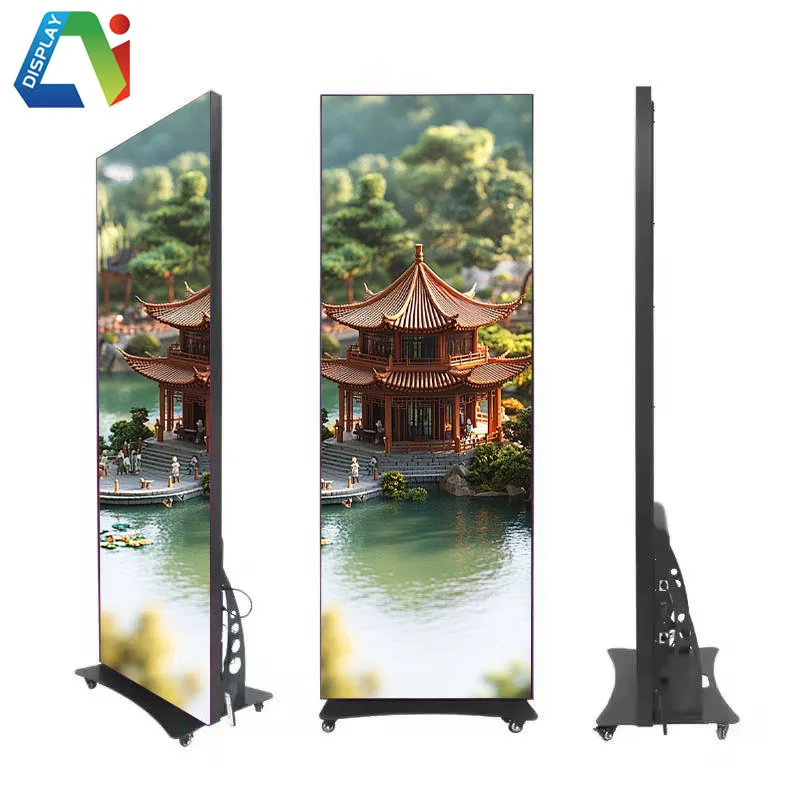
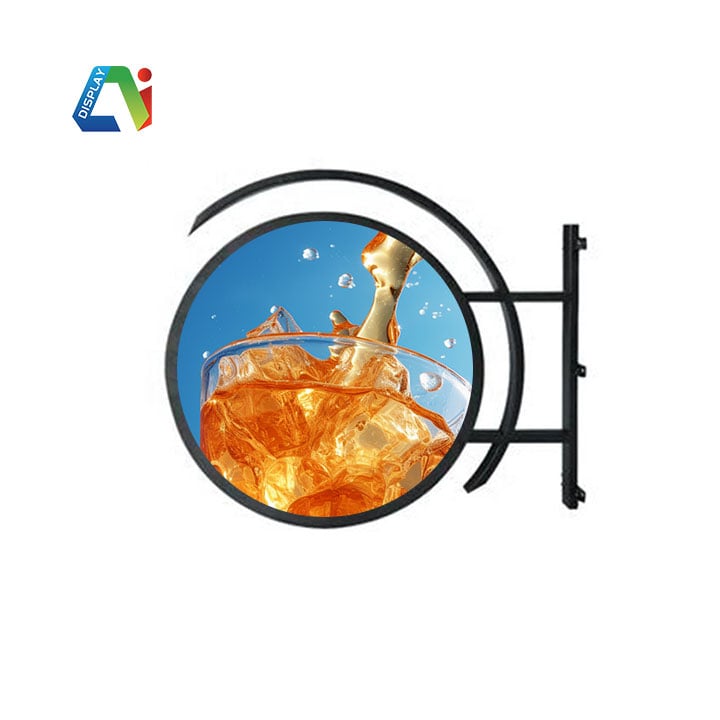
A custom-shaped LED display can be useful here because the screen does not have to follow a traditional large rectangle. Its dimensions can follow the available architectural area instead.
Viewing distance becomes especially important in a narrow corridor.
Because people may walk close to the screen, a coarse pixel pitch can make individual pixels more noticeable. Fine-pitch LED technology can provide smoother text, graphics and video at shorter distances.
However, selecting the smallest available pixel pitch is not automatically the right decision.
The correct choice should consider:
minimum viewing distance;
screen dimensions;
content type;
required resolution;
project budget.
A screen displaying detailed product information may require a finer pitch than one showing large abstract patterns.
Before production, it is useful to test sample content from the expected viewing distance instead of judging the screen only from technical specifications.
More brightness does not always mean better visibility.
Inside a narrow indoor corridor, excessive brightness can make the screen tiring to watch because light is reflected from walls, floors, glass and nearby surfaces.
The effect becomes stronger when the corridor uses darker decorative materials.
Brightness should therefore match the surrounding lighting conditions.
The screen should remain clear without becoming the brightest object in the viewer's entire field of vision.
If the corridor experiences different lighting conditions during the day, adjustable brightness control can help maintain a more comfortable result.
Hardware is only half of the problem.
Content design has a major effect on how a creative LED display feels inside a small space.
Fast cuts, flashing graphics, rapidly rotating objects and strong full-screen transitions can become overwhelming when the viewer is standing very close.
Corridor content normally works better when movement is controlled.
Smooth animation, slower transitions, large graphic elements and simple backgrounds are easier to understand while people are walking.
The direction of movement also matters.
If people normally walk from one end of the corridor to the other, animation can follow the same direction. This creates a sense of visual flow instead of making images constantly move against pedestrian movement.
A narrow corridor does not always have flat walls.
Some passages include rounded corners, columns, recessed surfaces or curved entrances. In these areas, a flexible LED display can help the digital surface follow the architecture rather than projecting into the walkway.
But the supporting structure must also be considered.
Even a thin LED module needs space for the frame, power supply, receiving cards, signal cables and ventilation.
Adding too much installation depth can reduce the usable corridor width.
For this reason, the complete LED structure—not only the module thickness—should be included in the architectural drawings before production.
A creative LED screen should not be evaluated only while standing directly in front of it.
For a corridor project, engineers and designers should test the screen the same way visitors will experience it.
Walk through the space at normal speed.
Check several questions:
Can the main message be understood without stopping?
Does the screen feel too bright at the closest point?
Are transitions uncomfortable when viewed from the side?
Can people still see doors and directional signs clearly?
Does any part of the supporting structure reduce walking space?
Testing the real walking route can reveal problems that are difficult to notice from drawings alone.
Consider a narrow passage connecting a hotel lobby with meeting rooms.
Instead of covering both walls with LED, the designer installs one long creative LED display on a single wall. A curved section continues around the entrance corner, while the opposite wall remains simple.
The content uses slow-moving brand graphics, destination information and soft transitions.
People notice the display immediately, but they are not surrounded by digital content.
The LED screen becomes part of the journey through the building rather than something competing with the space.
Yes, but viewing distance, installation depth and pedestrian space should be checked first. Front-maintenance designs can also be useful when there is very little service space behind the screen.
Not necessarily. In many projects, using selected LED zones produces a more comfortable result and gives viewers places to rest their eyes.
Yes. Flexible LED technology can be used for curved walls and rounded architectural transitions when the supporting structure is designed for the required radius.
Viewing distance, brightness, content movement, pixel visibility, screen depth, maintenance access and the normal pedestrian route should all be checked.
AI Display provides customized LED solutions for projects where conventional rectangular screens cannot match the available architecture.
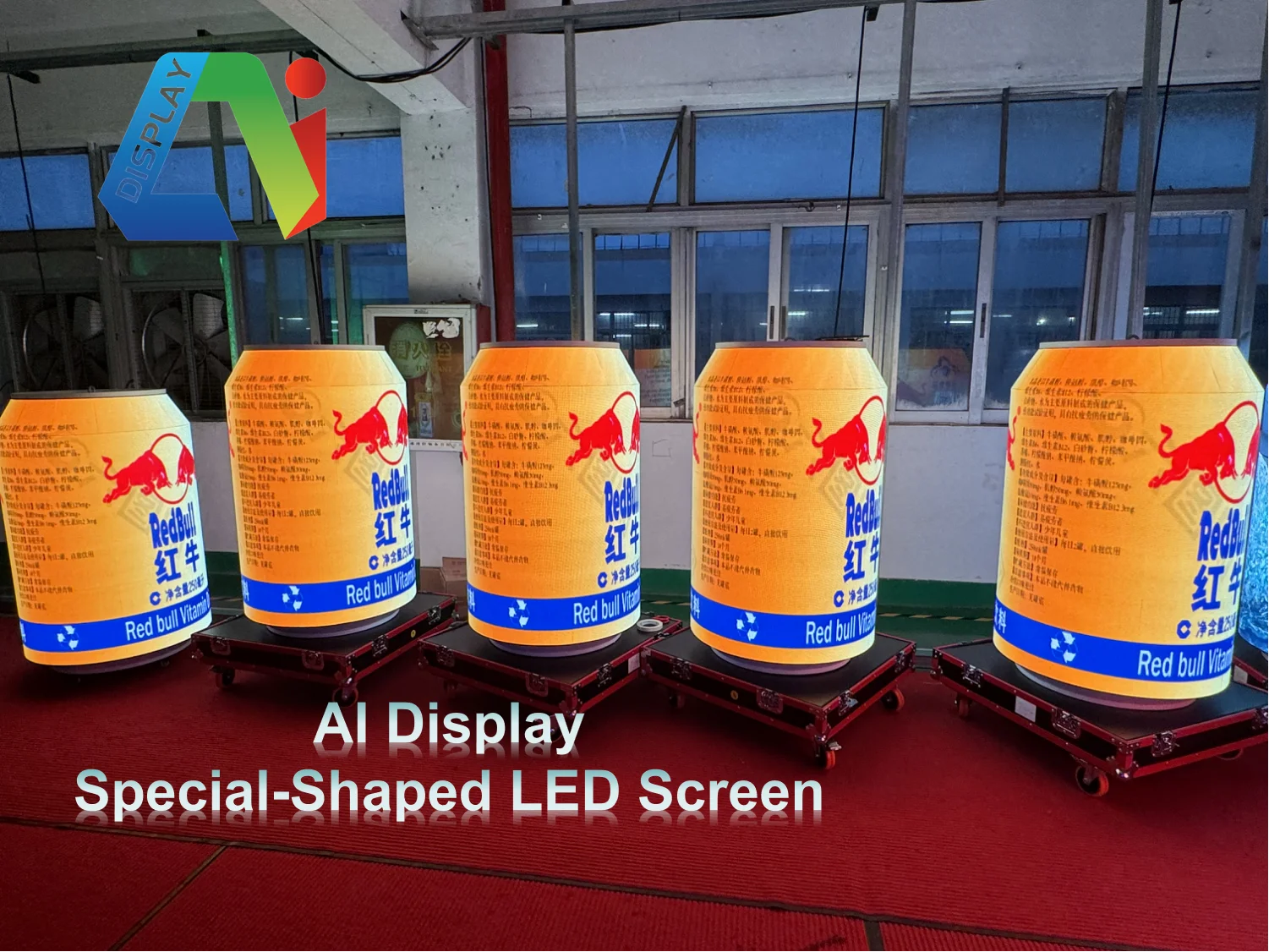
Our product range includes custom-shaped LED displays, flexible LED solutions, cylindrical displays, spherical LED screens and other irregular LED structures.
For corridor projects, the design should begin with the actual space: corridor width, viewing distance, wall geometry, installation depth, content requirements and maintenance access.
A successful creative LED display should attract attention without demanding it constantly.
In a narrow corridor, that balance is what turns an LED screen from a large digital surface into a comfortable part of the architecture.
 Hot News
Copyright © 2025 by Shenzhen Ai Display Technology Co., Ltd - Privacy policy
 EN
EN