Tersuspensi layar LED berbentuk gelombang telah menjadi ciri khas di ruang pameran modern, pusat perbelanjaan, venue konser, museum, dan ruang komersial mewah. Kurva mengalir dan tampilan mengambangnya menciptakan efek visual yang memukau yang tidak dapat ditandingi oleh dinding LED datar konvensional.
Namun, pemasangan layar overhead masif ini memerlukan lebih dari sekadar menggantung layar dari langit-langit. Insinyur harus menggabungkan desain struktural, manufaktur presisi, dan sistem pengikat canggih untuk menjamin keamanan serta estetika.
Layar LED melengkung yang digantung, sering disebut juga Layar langit-langit led atau layar LED fleksibel yang digantung , dipasang di atas area penonton dan mengikuti profil melengkung atau bergelombang yang disesuaikan.
Desainer menggunakan instalasi ini untuk menciptakan langit-langit digital yang imersif, pusat artistik, serta fitur arsitektural dinamis. Karena penonton dapat melihat layar dari berbagai sudut, layar tersebut menjadi bagian dari venue, bukan sekadar rambu digital biasa.
Setiap pemasangan yang sukses dimulai dengan sistem penopang beban yang kokoh.
Alih-alih memasang layar secara langsung ke atap bangunan, para insinyur memasang peralatan rigging profesional yang mendistribusikan beban secara aman ke seluruh struktur penopang.
Sistem ophanging biasanya mencakup:
Kerangka kerja ini memungkinkan teknisi pemasang mengangkat, menurunkan, dan menyesuaikan secara presisi posisi layar selama proses perakitan maupun pemeliharaan.
Profil gelombang yang elegan bergantung pada sistem rangka khusus.
Sebelum produksi dimulai, insinyur menghitung kelengkungan yang diperlukan dan memproduksi rangka baja atau aluminium yang sesuai dengan bentuk yang diinginkan. Rangka-rangka ini berfungsi sebagai tulang punggung struktural instalasi, menopang kabinet LED sekaligus mempertahankan garis-garis yang halus dan kontinu.
Tanpa rangka yang diproduksi secara presisi, tampilan akhir akan kehilangan geometri dan dampak visual yang diinginkan.
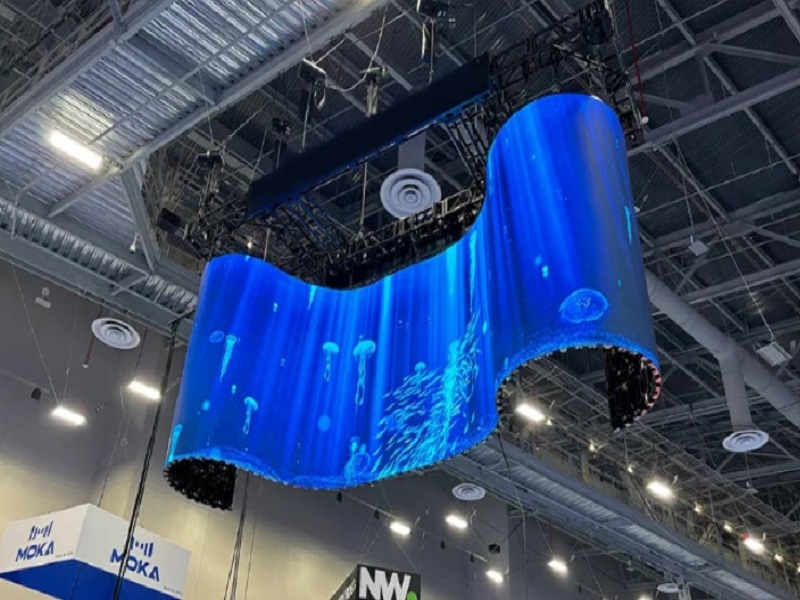
Sebagian besar tampilan gelombang yang digantung menggunakan metode konstruksi modular, sehingga memungkinkan pemasang membangun struktur besar secara efisien.
Banyak proyek menggunakan kabinet LED sempit yang dihubungkan melalui mekanisme penguncian yang dapat disesuaikan. Dengan mengatur setiap kabinet pada sudut kecil relatif terhadap kabinet berikutnya, pemasang menciptakan permukaan melengkung kontinu yang tampak mulus dari sudut pandang penonton.
Solusi ini menawarkan stabilitas struktural yang sangat baik dan cocok untuk venue berukuran besar.
Untuk bentuk organik yang lebih kompleks, desainer sering memilih modul LED fleksibel.
Modul-modul ini dilengkapi papan sirkuit yang dapat dibengkokkan dan bahan pelindung fleksibel yang menyesuaikan diri dengan rangka logam melengkung. Sistem pemasangan magnetik juga menyederhanakan pemasangan dan perawatan dari sisi depan tanpa mengganggu kehalusan permukaan tampilan.
Layar LED gantung berukuran besar jarang dirakit sepenuhnya di udara.
Sebagai gantinya, teknisi biasanya memulai dengan memasang baris pertama kabinet LED ke rangka truss melengkung di ketinggian dekat permukaan tanah. Selanjutnya, mereka sedikit mengangkat struktur tersebut menggunakan hoist listrik sebelum memasang baris modul berikutnya.
Dengan mengulangi proses pengangkatan dan perakitan ini, tim mampu merakit tampilan secara aman dan efisien sambil mempertahankan presisi penyelarasan sepanjang proyek.
Tampilan yang rapi memerlukan manajemen kabel yang cermat.
Instalatur biasanya memposisikan unit distribusi daya, kartu penerima, dan peralatan kontrol di atas atau di belakang struktur yang digantung. Sementara itu, kabel daya dan kabel data berjalan melalui rangka truss atau sejajar dengan kabel penggantung sebelum terhubung ke ruang kendali venue.
Akibatnya, pengunjung hanya melihat tampilan itu sendiri, sedangkan infrastruktur pendukung tetap tersembunyi dari pandangan.
Instalasi langit-langit LED yang digantung melibatkan beban struktural yang signifikan, sehingga analisis teknik sangat penting dilakukan sebelum konstruksi dimulai.
Tim proyek harus memverifikasi bahwa bangunan mampu menopang berat gabungan tampilan, rangka truss, peralatan rigging, serta beban dinamis yang mungkin terjadi selama proses pemasangan atau pemeliharaan. Selain itu, kabel pengaman sekunder dan sistem pemasangan redundan memberikan perlindungan tambahan dalam kemungkinan kecil terjadinya kegagalan pada sambungan utama.
Pemeriksaan rutin, perangkat pengangkat bersertifikat, dan kepatuhan terhadap peraturan struktural serta keselamatan lokal semakin meningkatkan keandalan jangka panjang.
 Berita Terkini
2026-09-16
2026-09-15
2026-09-14
Hak Cipta © 2025 oleh Shenzhen Ai Display Technology Co., Ltd - KEBIJAKAN PRIVASI
 EN
EN