Når du velger en kuleformet LED-skjerm , kjøpere fokuserer ofte først på pikselavstanden. Likevel er kule-diameter like viktig.
En 1-meter LED-kule og en 3-meter LED-kule kan bruke samme pikselavstand, men de har ikke samme totale visningsflate, antall piksler eller innholdskrav. Når diameteren øker, vokser overflatearealet raskt. Dette påvirker hvor mye visuell informasjon skjermen kan vise og hvordan innholdet bør produseres.
Å forstå sammenhengen mellom LED-kule-diameter, oppløsning og innhold kan hjelpe deg med å velge en skjerm som passer til avstanden fra seerpunktet, installasjonsrommet og bruksområdet.
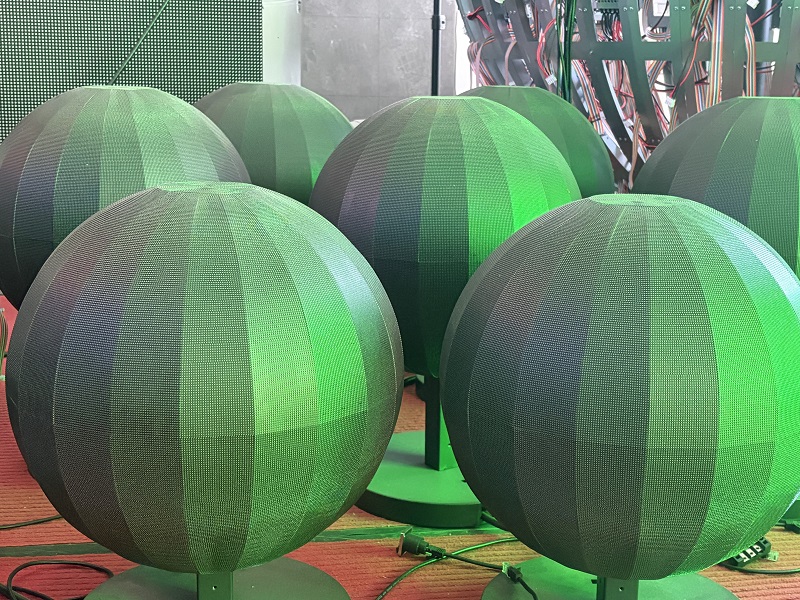
I motsetning til en vanlig flat LED-vegg viser en kule innhold over en fullstendig kurvet overflate.
En større diameter betyr et større overflateareal. Hvis pikselavstanden forblir den samme, krever den større kulen flere LED-piksler for å dekke denne overflaten.
For eksempel tenk deg to kuler som bruker samme P2.5-moduler:
Diameteren har blitt doblet, men overflatearealet blir omtrent fire ganger større. Det betyr at kula med 2 meters diameter trenger omtrent fire ganger så mange piksler når samme pikselavstand brukes.
Derfor bør diameter vurderes sammen med pikselavstand, ikke som en separat spesifikasjon.
To spesifikasjoner har størst innvirkning på LED-kulens oppløsning :
Diameter bestemmer hvor stort overflateareal som må dekkes.
Pixelpitch bestemmer hvor tett LED-pikslene plasseres.
En mindre pikselavstand gir flere piksler innenfor samme område. For eksempel plasserer P1.5 pikslene mye tettere enn P4.
Dette betyr imidlertid ikke at alle prosjekter trenger den minste mulige pikselavstanden.
En stor kule som er montert høyt inne i et kjøpesenter kan sees fra 10 meter unna. I dette tilfellet kan en større pikselavstand fortsatt gi et godt visuelt resultat.
En mindre kule som brukes i et utstillingsrom kan sees fra bare 2 eller 3 meter unna. En finere pikselavstand kan være mer nyttig, fordi tilskuerne ser skjermen fra mye kortere avstand.
AiDisplay tilbyr kuleformede LED-skjermer med flere alternativer for pikselavstand, inkludert P1.2, P1.5, P1.8, P1.9, P2, P2.5, P3, P4, P5, P6, P8 og P10. Dette gjør det mulig å tilpasse oppløsningen til ulike kulestørrelser og betraktningsforhold.
Nei.
En større LED-kule gir mer fysisk visningsareal, men den er ikke automatisk skarpere.
For eksempel kan en stor kule med pikselavstand P6 ha flere totale piksler enn en veldig liten kule, men pikslene er også plassert lenger fra hverandre. Når den betraktes fra nært hold, kan pikselstrukturen bli lettere å oppdage.
Derfor bør kjøpere unngå å velge en LED-kule utelukkende basert på diameter.
En bedre utvalgsprosess er:
Søknad → Seavstand → Diameter → Pixelpitch → Innhold
For innendørs prosjekter med kort seavstand er et mindre pixelpitch vanligvis viktigere. For store utendørsinstallasjoner eller installasjoner på lang avstand kan kulestørrelse og synlighet være viktigere enn ekstremt fin pikseloppløsning.
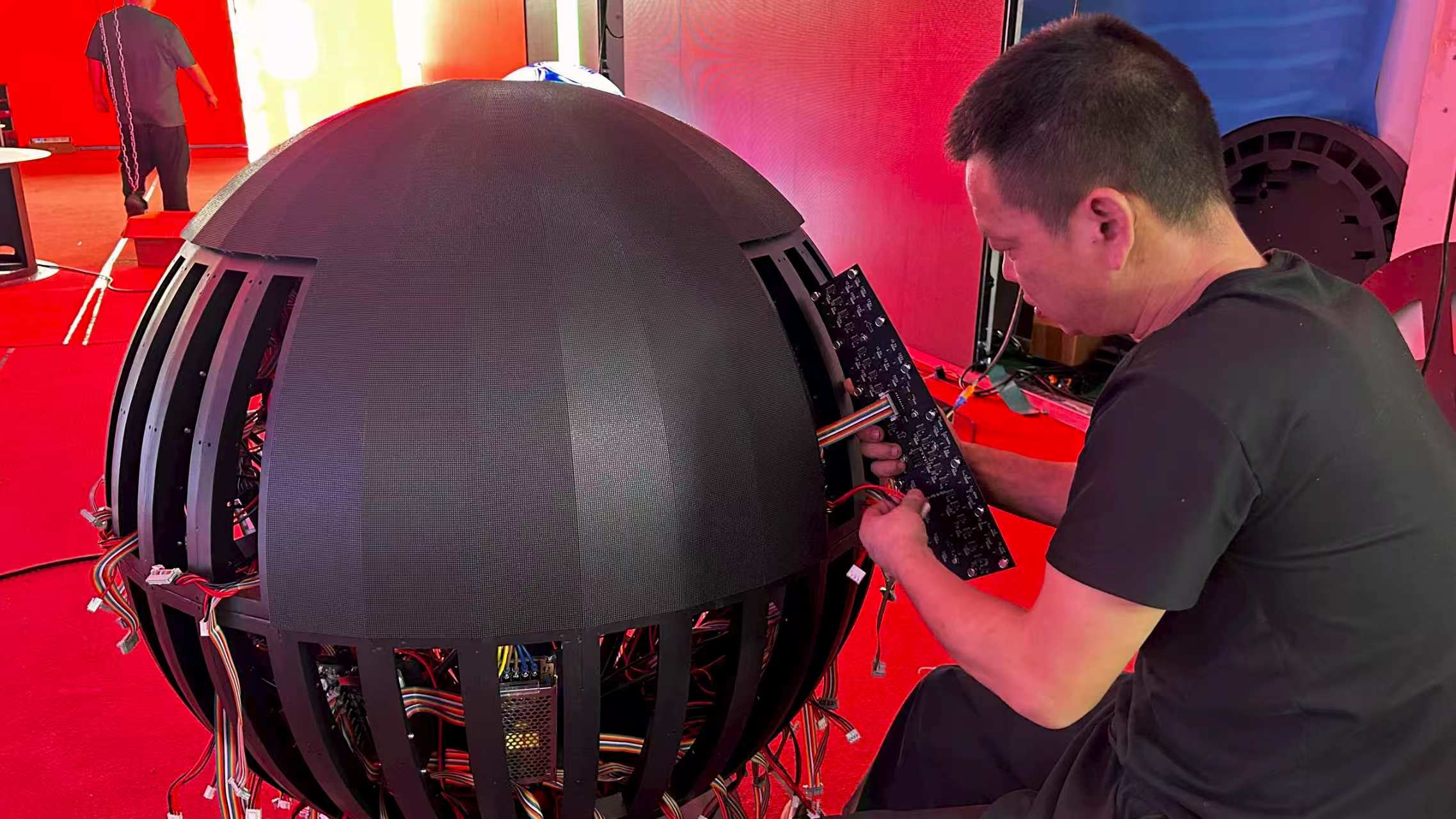
Diameteren påvirker også hvilken type innhold som fungerer best.
Små kuler brukes ofte til butikkdisplay, utstillinger, produktpresentasjoner og dekorative installasjoner.
Enkelt visuelt innhold fungerer vanligvis best:
For mye liten tekst eller fine detaljer kan gjøre innholdet vanskelig å forstå, spesielt hvis kula har et relativt lavt totalt antall piksler.
En mediumstørrelse globusformet LED-skjerm gir mer plass til kreativt innhold.
Den kan vise:
Disse størrelsene er egnet for kjøpesentre, museer, utstillingslokaler, hoteller og bedriftsrom.
Store LED-kuler kan skape et mye sterkere visuelt inntrykk.
De er egnet for immersive installasjoner, offentlige rom, vitenskapsmuseer, store arrangementer og utendørs landemerker.
Fordi det totale antallet piksler kan bli svært høyt, kan store kuler støtte mer detaljert visuelt materiale. De kan imidlertid også kreve mer avansert videobehandling, innholdskartlegging og kontrollutstyr.
For utendørsprosjekter bør en utendørs LED-globus også ta høyde for lysstyrke, vannbeskyttelse og seavstand i tillegg til oppløsning.
En vanlig feil er å lage innhold til en LED-kule på nøyaktig samme måte som innhold til en vanlig LED-vegg.
De fleste standardvideoene er designet for rektangulære skjermer med 16:9-format.
Når et rektangulært bilde avbildes direkte på en kuleformet overflate, kan flere problemer oppstå:
Av denne grunn LED-kuleinnhold bør designes med tanke på skjermens fysiske form.
For komplekse prosjekter kan pikkelavbildning og geometrisk korreksjon hjelpe til å plassere innholdet riktig over hele kuleoverflaten.
| Kulens diameter | Passende innhold | Typisk Anvendelse |
|---|---|---|
| 0,2–0,8 m | Logoer, ikoner, enkle animasjoner | Butikker, skrivebordskjermer, utstillinger |
| 1–2 m | Produktanimasjoner, merkevarepresentasjon, globus-effekter | Senter, visningsrom, museer |
| 2–4 m | Detaljerte grafikk, 360°-animasjoner | Arrangementer, utstillinger, atrier |
| 5 m+ | Immersive visuelle effekter og animasjoner i stor skala | Landemerker, museer, offentlige områder |
Disse rekommenderte verdiene er kun generelle anbefalinger. Den endelige innholdskapasiteten avhenger også av pixelpitch, seavstand og kontrollsystemet .
En vanlig feil er å velge den minste pixelpitchen bare fordi det høres bedre ut.
En finere pixelpitch øker pikseltettheten, men kan også øke antallet LED-komponenter, kravene til behandling og prosjektkostnadene.
En annen feil er å velge diameteren før seavstanden er vurdert.
En kule med en diameter på én meter kan virke imponerende fra tre meters avstand, men ser liten ut når den er montert i et stort atrium. På den andre siden kan en for stor kule være unødvendig i et lite utstillingsrom.
Innholdet bør også planlegges før produksjonen. Å vite om kulen skal vise logoer, tekst, videoer eller detaljerte 360-graders animasjoner hjelper produsenten med å anbefale en mer egnet konfigurasjon.
Før du bestiller en kuleformet LED-skjerm, besvar disse spørsmålene:
AiDisplay leverer tilpassbare LED-kuleskjermer for innendørs- og utendørsprosjekter. Tilgjengelige konfigurasjoner dekker ulike diameterer og pikselavstander, slik at skjermstørrelse, betraktningsavstand og innholdsbehov kan vurderes sammen.
LED-kulens diameter påvirker mye mer enn bare fysisk størrelse. Det endrer visningsflateareal, totalt antall piksler, opplevelsen av bildet og kravene til innhold.
En større kule kan gi mer plass for detaljert visuelt innhold, men diameter alene avgjør ikke bildekvaliteten. Pikselavstand, seavstand og innholdsdesign må også tas i betraktning.
I stedet for å spørre «Hvilken diameter skal jeg kjøpe?», er et bedre spørsmål:
«Hvilken kombinasjon av diameter, pikselavstand og oppløsning på innholdet fungerer best for min seavstand og anvendelse?»
Å velge disse faktorene sammen kan gi en kuleformet LED-skjerm som ser skarp ut, bruker den tilgjengelige oppløsningen effektivt og leverer den ønskede 360-graders visuelle opplevelsen.
Det finnes ingen enkelt beste pikselavstand. Innendørs prosjekter med nært seavstand profitterer vanligvis av finere pikselavstander, mens større kuler som ses fra lengre avstand ofte kan bruke en større pikselavstand.
Hvis pikselavstanden forblir den samme, øker en økning i diameteren displayets overflateareal og dermed det totale antallet piksler som kreves.
 Siste nytt
2026-10-12
2026-10-11
2026-10-06
Copyright © 2025 by Shenzhen Ai Display Technology Co., Ltd - Personvernpolitikk
 EN
EN