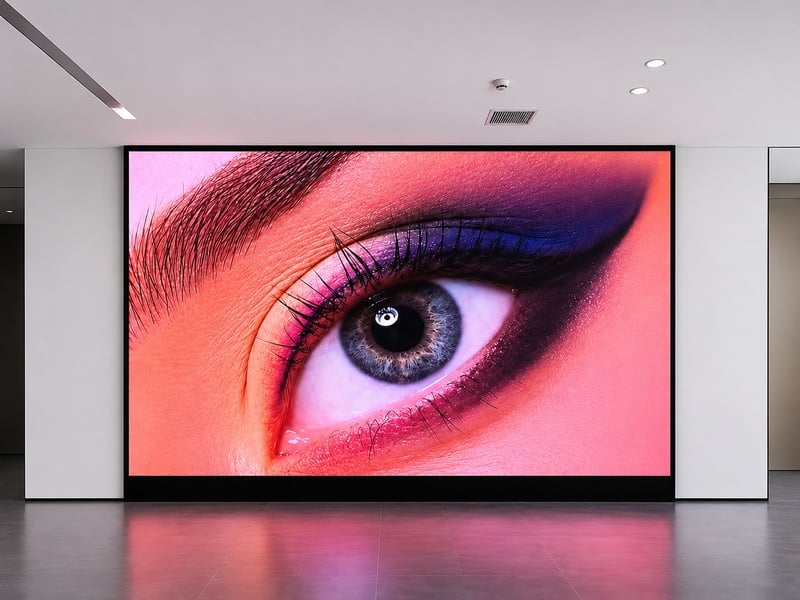
For event companies, an LED display may be used at a concert today, a trade show tomorrow, and a corporate event next week. The same cabinets are transported, installed, dismantled, and stored repeatedly.
During these operations, small problems can occur. An LED module may stop displaying, a power supply may fail, or a signal cable may become loose. If the required replacement part is not available, technicians may spend valuable time looking for a solution.
This is why rental LED display spare parts planning should be part of every event company's equipment management strategy.
A well-organized spare parts inventory helps technicians respond faster, reduces equipment downtime, and keeps events running according to schedule.
A missing spare part can create problems beyond the damaged component itself.
For example, one faulty module may leave a visible dark area on the screen. A damaged receiving card can interrupt image transmission across an entire cabinet. If the power supply fails, several connected modules may stop working.
For live events, these problems can affect presentations, stage performances, product launches, and live broadcasts.
Emergency purchases can also increase maintenance costs. Event companies may need to arrange urgent shipping or borrow compatible components from another equipment supplier.
Keeping essential parts available in advance is usually more practical than dealing with unexpected shortages during an event.
Rental LED displays experience more physical handling than many fixed installations.
Several factors can increase component wear:
Frequent transportation: Vibration and accidental impacts may damage connectors, cables, and cabinet components.
Repeated assembly: Technicians connect and disconnect power and signal cables during every installation.
Long operating hours: Continuous use during concerts and exhibitions places demands on power supplies and cooling systems.
Different working environments: Outdoor events may expose equipment to dust, moisture, and temperature changes.
Improper storage: Poor packaging and disorganized storage can lead to missing or damaged parts.
Understanding these conditions helps event companies decide which components deserve priority in their spare parts inventory.
Not every component needs to be purchased in large quantities. Companies should prioritize parts that are frequently used, easy to replace, and important for restoring normal screen operation.
LED modules should be among the first items on the inventory list. Dead pixels, damaged LEDs, and abnormal colors can affect the appearance of the display.
Keep compatible modules from the same product series and, where possible, the same production batch. This helps reduce differences in brightness and color after replacement.
A faulty power supply may cause flickering, unstable brightness, or a completely black section of the screen.
Keep several compatible power supplies in stock. Check their output voltage, rated capacity, dimensions, and connector positions before purchasing replacements.
Receiving cards are responsible for processing display signals inside LED cabinets. A damaged card may cause image loss, abnormal colors, or communication problems.
Spare receiving cards should match the existing control system, firmware, and cabinet configuration.
Cables are among the easiest components to overlook.
Power cables, network cables, and internal connection cables may become loose, bent, or damaged during repeated installation.
Keep different cable lengths and connector types available according to the equipment used by your company.
Small components can also interrupt installation work.
Useful spare items include:
Power connectors
Signal connectors
Data cables
Locking pins
Screws and fixing accessories
Protective corner components
These parts are relatively small and easy to organize, but they can save considerable time during on-site maintenance.
Rental LED cabinets are connected and disconnected frequently. Over time, locking mechanisms may become loose or difficult to operate.
Damaged locks can affect cabinet alignment and connection stability. Keep compatible replacement locks and inspect them regularly.
There is no single inventory quantity suitable for every rental business. The required amount depends on the total screen area, number of cabinets, event frequency, and transportation conditions.
A practical starting point is to calculate spare quantities based on the equipment in active service.
For example, a company operating 100 rental cabinets could begin with an illustrative inventory such as:
| Spare Part | Suggested Starting Stock |
|---|---|
| LED modules | 2–3% of installed modules |
| Power supplies | 2–3% of installed units |
| Receiving cards | 1–2% of installed units |
| Power and signal cables | 3–5% of commonly used cables |
| Cabinet locks | 2–3% of installed locks |
These figures are planning examples, not universal industry standards. Companies should adjust them according to maintenance records, supplier lead times, and actual failure rates.
Having spare parts in stock does not automatically mean they are ready for use.
Before every major event, technicians should check the condition of replacement components.
First, power on spare LED modules and check for dead pixels, brightness differences, and abnormal colors.
Second, test power supplies using the correct electrical specifications. Check output voltage and inspect connectors for overheating or physical damage.
Third, connect receiving cards to a compatible cabinet and verify signal communication.
Finally, inspect cables for broken connectors, loose contacts, and damaged insulation.
Each spare part should have a clear label showing its model, specification, compatible cabinet series, and storage date. A simple inventory record can also help technicians track usage and replacement history.
Consider an event company preparing a large LED video wall for a concert.
Before transportation, its technical team checks the cabinet inventory and prepares spare modules, power supplies, receiving cards, and connection cables.
During installation, one cabinet develops a dark section. Instead of replacing the entire cabinet, technicians inspect the affected area and identify the faulty module.
They replace it with a compatible spare, test the display, and continue the installation.
This approach reduces troubleshooting time and helps the event team avoid unnecessary delays.
For companies using rental LED screens across different venues, this preparation process should become part of their regular event checklist.
Q1: What is the most important spare part for a rental LED display?
LED modules, power supplies, and receiving cards are among the most important components. The priority depends on the equipment configuration and previous maintenance records.
Q2: Can different rental LED display modules be used as replacements?
Not always. Modules should match the original specifications, including pixel pitch, dimensions, voltage, connector layout, and control requirements.
Q3: How should spare LED modules be stored?
Keep them in a clean, dry, and protected environment. Use suitable packaging to prevent static electricity, dust, moisture, and physical damage.
Q4: Should event companies prepare spare parts for every project?
For major events, preparing compatible spare parts in advance is strongly recommended. The quantity should depend on project size and operational requirements.
Good spare parts planning starts with choosing equipment that is easy to maintain.
Cabinet compatibility, convenient module replacement, stable locking systems, and accessible technical support all contribute to long-term operating efficiency.
AILEDDISPLAY provides rental LED display solutions for concerts, exhibitions, stage performances, and other event applications. Its product range includes different pixel pitches and cabinet configurations to meet various indoor and outdoor requirements.
With manufacturing capabilities, customized solutions, and technical support, AILEDDISPLAY helps customers evaluate suitable LED display configurations for their projects.
Before purchasing, event companies should discuss spare parts availability, replacement procedures, cabinet compatibility, and after-sales support with their supplier.
A reliable rental LED display system is not only about delivering good image quality. It is also about keeping equipment ready for the next event.
 Hot News
2026-11-19
2026-11-18
2026-11-17
Copyright © 2025 by Shenzhen Ai Display Technology Co., Ltd - Privacy policy
 EN