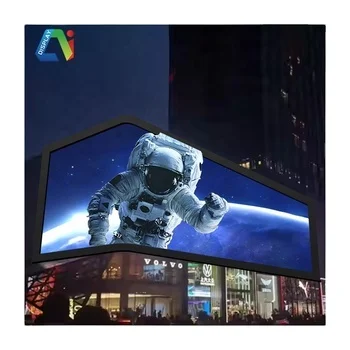
A shaped LED display is designed to create visual effects that traditional rectangular screens cannot achieve. It can be built into circles, cylinders, bottles, diamonds, curves, and other customized structures.
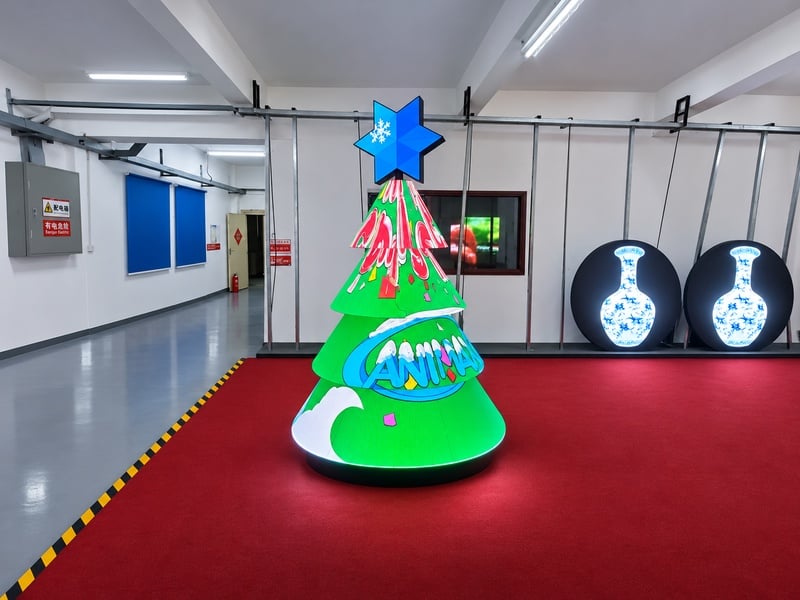
However, producing the correct shape is only part of the project. During installation, even small differences in module position or cabinet dimensions can affect the final appearance.
For example, a curved LED screen may have visible gaps between modules, while a bottle-shaped display may show uneven edges around its outline. These problems can make the entire installation look unfinished.
Therefore, installation accuracy should be considered from the beginning of the project, not only during final assembly.
Poor installation can affect both the appearance and performance of a custom LED display.
Common problems include:
Uneven module gaps: Different spacing between modules makes the screen surface look inconsistent.
Shape distortion: Incorrect positioning can change the intended outline of the display.
Image misalignment: Text, logos, and moving images may not connect correctly across different sections.
Uneven screen surfaces: Poor mechanical adjustment can create visible steps or irregular curves.
Maintenance difficulties: Incorrect structural planning may make individual modules difficult to access or replace.
These issues are especially noticeable in close-view environments such as shopping malls, exhibitions, retail stores, and brand experience centers.
There are several reasons why shaped LED displays may not match the original design.
Incorrect dimensional measurements
If the installation space is measured incorrectly, the supporting structure may not match the screen dimensions.
Unsuitable module selection
Different shapes require different module designs. Flexible LED modules are suitable for many curved structures, while more complex geometries may require specially designed modules or customized cabinet structures.
Mechanical tolerance
Small differences in cabinet dimensions, connection positions, and mounting angles can accumulate during assembly.
Incorrect pixel mapping
A shaped LED display does not always follow a standard rectangular pixel layout. Without proper mapping, displayed content may appear stretched, cut off, or incorrectly positioned.
A reliable installation process should begin before the display reaches the installation site.
First, confirm the overall dimensions, screen shape, viewing distance, and installation environment. For complex projects, 3D drawings can help engineers understand the structure and identify possible assembly problems.
Next, select suitable LED modules and supporting cabinets according to the required geometry. Flexible modules can help create smooth curved surfaces, while customized mechanical components can support irregular designs.
During installation, technicians should follow the approved drawings and check the position of each section before tightening the connections.
It is also important to plan maintenance access. A creative LED display should not only look attractive but also allow technicians to replace modules and inspect electrical components when necessary.
Finally, complete pixel mapping, brightness adjustment, and color calibration before the project is handed over.
Visual inspection alone is not enough to confirm installation quality. Several practical tests should be completed.
Dimension and shape inspection
Compare the finished structure with the approved drawings. Check the overall dimensions, angles, curvature, and external outline.
Module gap inspection
Inspect the connections between adjacent modules. Look for uneven gaps, protruding edges, or visible steps on the display surface.
Full-screen image testing
Play white, black, red, green, and blue test patterns. These help identify dead pixels, brightness differences, and color inconsistencies.
Content alignment testing
Display logos, straight lines, text, and moving images. Check whether the content follows the intended screen shape without obvious distortion or interruption.
Continuous operation testing
Run the display for an extended period under normal operating conditions. Check signal stability, temperature, brightness consistency, and abnormal shutdowns.
These checks help identify problems before the display enters commercial operation.
Different shaped LED display projects require different configurations.
Flexible LED modules: Suitable for curved walls, cylindrical screens, and other curved structures.
Customized LED cabinets: Help create specific outlines and support more complex mechanical designs.
Receiving cards and video processors: Manage signal transmission and image mapping across irregular screen layouts.
Supporting frames and connectors: Maintain the required installation position and structural stability.
Power supplies and cables: Provide stable electrical connections throughout the display system.
For close-view applications, pixel pitch should be selected according to viewing distance and content requirements. Indoor and outdoor projects also need different brightness, protection, and structural considerations.
Shaped LED displays are increasingly used in commercial and entertainment environments.
In shopping malls, curved and cylindrical screens can become visual landmarks and support promotional campaigns.
At exhibitions, diamond-shaped, circular, and customized displays help brands present products in a more distinctive way.
For entertainment venues, creative LED structures can be integrated into DJ booths, stage backgrounds, and immersive installations.
Bottle-shaped and can-shaped LED displays are also suitable for beverage brands and product launches because their screen structures can reflect the appearance of the products being promoted.
For every application, the final design should consider the installation space, audience viewing positions, content format, and maintenance requirements.
Q1: Can a shaped LED display be customized according to a drawing?
Yes. Many shaped LED displays can be customized according to project drawings, dimensions, and design requirements. The available structure depends on the module technology and mechanical design.
Q2: Can flexible LED modules create any curved shape?
Flexible modules support many curved designs, but their bending limits must be respected. The required radius and installation structure should be confirmed before production.
Q3: How can image distortion be avoided?
Correct pixel mapping is essential. Engineers should configure the display layout according to the actual physical shape and test the content before final delivery.
Q4: Is maintenance difficult for irregular LED screens?
Maintenance depends on the structural design. Planning front or rear service access and using replaceable modules can make future maintenance easier.
Q5: What information should buyers provide before requesting a quotation?
Buyers should prepare the desired shape, dimensions, indoor or outdoor environment, pixel pitch, viewing distance, installation method, and reference drawings or pictures.
Shenzhen Ai Display Technology Co., Ltd. provides customized LED display solutions for different commercial and professional applications.
Our product range includes spherical LED displays, cylindrical LED screens, wine bottle-shaped LED displays, disc displays, and other irregular-shaped LED solutions.
With in-house manufacturing, professional engineering support, and CNC processing technology, we focus on product structure, installation accuracy, and visual performance.
Our products have been used in projects across more than 100 countries and regions, covering exhibitions, music festivals, sporting events, retail spaces, and commercial installations.
From product selection and structural design to manufacturing and technical support, AI Display works with customers to develop LED display solutions that match their project requirements.
If you are planning a custom shaped LED display project, visit www.aileddisplay.com and contact our team to discuss your design.
 Hot News
Copyright © 2025 by Shenzhen Ai Display Technology Co., Ltd - Privacy policy
 EN