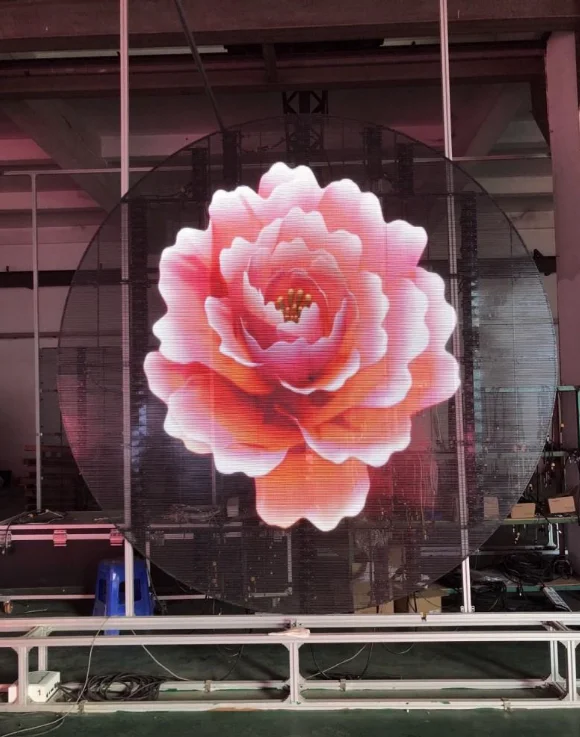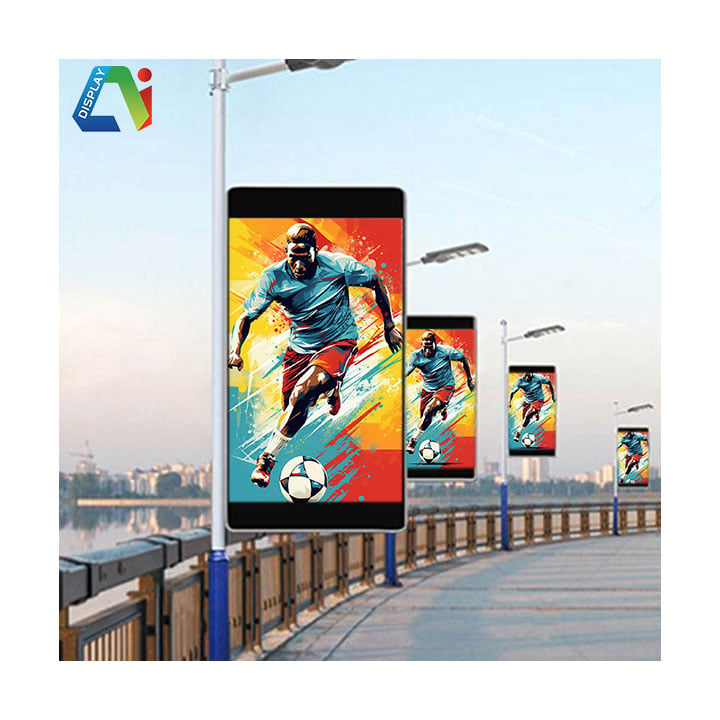
Transparent LED displays are widely used at concerts, exhibitions, product launches, shopping malls, and corporate events. Their lightweight design and high transparency make them suitable for suspended installations where traditional LED cabinets may block too much light or space.
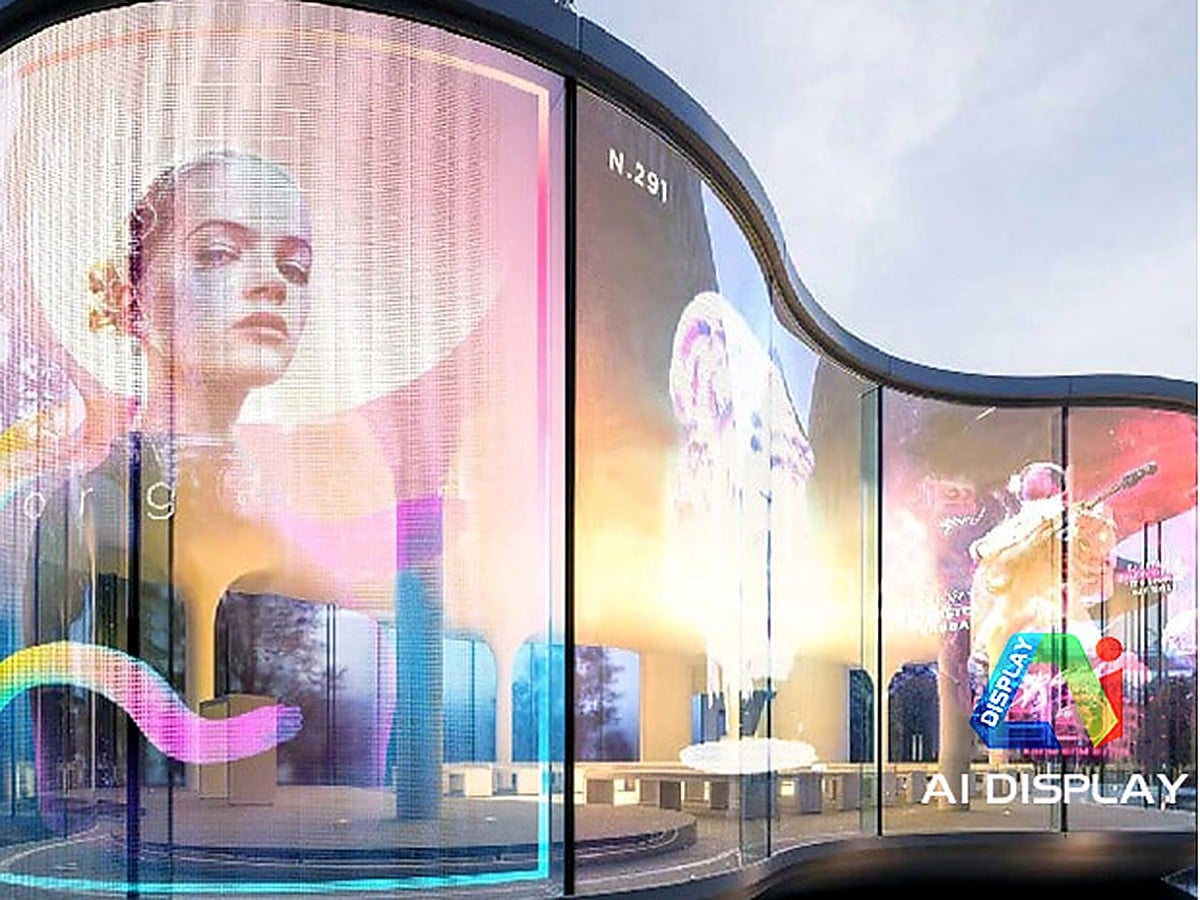
However, a lightweight screen does not automatically mean a safe hanging installation.
Before lifting a transparent LED display, event contractors must confirm the total suspended weight, rigging points, truss capacity, and connection methods. A screen that looks stable during ground assembly may behave differently after being suspended several meters above the audience.
A clear rigging plan helps the installation team identify structural problems before the event begins.
Incorrect load calculations can create several installation risks.
First, an overloaded truss or ceiling connection may become deformed or unstable. Second, uneven load distribution can place excessive force on individual suspension points. Third, unsuitable connectors may loosen when the screen experiences movement or vibration.
There are also operational consequences. If the rigging system fails inspection, the event team may need to delay installation, change the display position, or arrange additional structural support.
For concerts and exhibitions, these delays can affect the entire production schedule.
Therefore, the hanging load must be checked as part of the project design, not after the LED screen arrives at the venue.
The actual suspended load includes more than the LED display itself.
The installation team should consider the following components:
LED display weight: The weight of all transparent LED panels or modules.
Supporting frame: Aluminum frames, steel structures, and connecting bars.
Rigging hardware: Clamps, shackles, lifting brackets, and other connectors.
Cables: Power and signal cables, including their support arrangements.
Additional equipment: Controllers, power distribution units, and accessories when they are suspended with the screen.
The weight of each component should come from manufacturer specifications or verified measurements.
For example, a display measuring 6 m × 3 m has a screen area of 18 m². If the confirmed panel weight is 8 kg/m², the screen itself weighs approximately 144 kg.
However, 144 kg is not the final hanging load. The frame, cables, rigging equipment, and other suspended components must also be included.
This distinction is important when preparing a reliable rigging calculation.
A practical rigging plan should include four main checks.
Step 1: Confirm the Display Dimensions and Weight
Obtain the final screen dimensions, panel configuration, and unit weight from the LED manufacturer. If the design contains multiple sections, calculate each section separately.
Step 2: Identify Every Suspension Point
Mark the planned hanging positions on the structural drawing. Check the distance between points and confirm whether the supporting frame distributes the load evenly.
Do not assume that every suspension point carries the same weight. The actual distribution depends on the structure, center of gravity, cable arrangement, and lifting configuration.
Step 3: Check Truss and Hardware Capacity
Confirm the rated working load limit (WLL) of every relevant component, including clamps, shackles, hoists, and lifting accessories.
The truss and building attachment points must also be assessed for the actual load configuration. A truss's published capacity cannot be applied without considering span, loading position, support conditions, and other equipment.
Step 4: Review the Complete Load Calculation
Prepare a load schedule showing the component weight, total suspended weight, suspension-point arrangement, and applicable design requirements.
A qualified structural or rigging engineer should review the calculation and confirm that the installation complies with local regulations and venue requirements.
There is no single safety factor that can replace a project-specific engineering assessment.
A drawing alone cannot confirm that the physical installation is ready.
Before lifting the display, the team should complete a pre-installation inspection.
Check the following:
Confirm that all rigging hardware has the correct rating and identification.
Inspect lifting brackets, clamps, shackles, and connection points for damage or deformation.
Verify that the supporting frame matches the approved drawings.
Check that cables have independent support where required and do not pull unevenly on the LED panels.
Confirm that the suspension arrangement does not create unexpected side loads.
Review the lifting sequence and communication between operators.
After lifting, authorized personnel should inspect the completed installation according to the approved rigging procedure.
Any load testing or proof testing must be specified and supervised by qualified personnel. Never improvise a test by adding extra weight to a suspended LED screen.
Different transparent LED displays require different support arrangements.
For example, rigid transparent LED panels may use dedicated hanging bars or connecting frames. Flexible transparent LED film systems may require a different mounting method depending on their substrate and installation environment.
Important components include:
Aluminum support frames
Dedicated hanging brackets
Connecting bars
Rated lifting clamps
Safety cables where required
Power and signal cable supports
The selected structure should match the actual product design. Installers should not assume that accessories designed for conventional rental LED cabinets are suitable for every transparent LED display.
You can explore different options through TOOSEN's Transparent LED Display products.
Consider an exhibition project using a 6 m × 3 m transparent LED display suspended above a product presentation area.
Before installation, the contractor receives the display weight, structural drawings, and hanging-point layout from the manufacturer.
The rigging team then calculates the complete suspended load, including the supporting frame, cables, and connection hardware. The venue's approved rigging points are checked against the proposed arrangement.
During preparation, technicians assemble the display sections on the ground and inspect the connections. The screen is then lifted according to the approved installation sequence.
Before the exhibition opens, the team checks the screen's alignment, cable routing, visual performance, and structural connections.
This process reduces last-minute adjustments and helps the event team complete installation in a controlled way.
Q1: Is a transparent LED display always lighter than a conventional LED screen?
Not necessarily. Weight depends on the panel design, supporting frame, pixel pitch, and installation accessories. Always use the confirmed project specifications.
Q2: How do I calculate the total hanging load?
Add the weight of the LED panels, supporting structures, cables, rigging hardware, and all other equipment suspended by the same system. Have the final calculation reviewed by a qualified engineer.
Q3: Can transparent LED displays be suspended from standard event trusses?
They may be suitable for truss installation, but compatibility depends on the total load, truss configuration, connection hardware, and venue approval.
Q4: Do transparent LED displays need safety cables?
Additional safety measures depend on the installation design, product requirements, and local regulations. The rigging engineer should specify the appropriate secondary retention system.
Q5: What documents should buyers request before installation?
Request product weight specifications, structural drawings, suspension-point information, accessory ratings, installation instructions, and relevant test or inspection records.
A reliable transparent LED project requires more than a good-looking screen. Product specifications, structural design, installation conditions, and technical support must work together.
For event contractors and AV integrators, early communication with the manufacturer can make it easier to confirm panel dimensions, product weight, mounting accessories, and installation requirements.
Before your next event, prepare the rigging plan early and verify every load-bearing connection. A properly engineered installation protects the equipment, the venue, and everyone working around the display.
Contact aileddisplay to discuss your transparent LED display project and request product specifications for installation planning.
 Hot News
2026-11-09
2026-11-07
2026-11-06
Copyright © 2025 by Shenzhen Ai Display Technology Co., Ltd - Privacy policy
 EN