Customized LED displays are often transported between factories, warehouses, exhibition halls, event venues, and rental sites. For rental companies and event contractors, the same LED cabinets may be packed, shipped, unloaded, and installed many times.
However, standard packaging is not always suitable for repeated transportation. Cabinets can move inside the case, corners may hit hard surfaces, and connectors can be damaged by vibration. Even when the LED modules look normal, hidden damage to internal components may affect display performance later.
A customized LED display flight case provides more than a storage space. It creates a protective structure that keeps cabinets stable during transportation and makes loading and unloading easier.
Poor flight case design can lead to several problems:
Cabinet scratches: Direct contact between cabinets and hard case surfaces can damage painted finishes.
Corner damage: Repeated impact during loading and unloading may deform cabinet edges.
Module damage: Pressure on the LED surface can damage LEDs or protective masks.
Connector problems: Loose cabinets may cause repeated stress on power and signal connectors.
Transportation delays: Damaged equipment may require repair before the next event.
For rental businesses, these problems increase maintenance costs and reduce equipment availability. A well-designed flight case helps lower these risks.
Transportation damage does not always come from serious accidents. Small problems repeated over time can also affect LED cabinets.
First, the internal space may be too large. If cabinets move during transportation, they can collide with each other.
Second, the protective foam may not match the cabinet dimensions. Poorly positioned foam can leave corners, edges, or connectors exposed.
Third, the case structure may not be strong enough for its loading conditions. Weak joints, worn casters, and loose handles can reduce transportation stability.
Finally, incorrect packing methods can create uneven pressure. Stacking cabinets without considering their weight and support points may damage the display surface.
A practical flight case should be designed according to the cabinet size, weight, shape, and transportation requirements.
Match the Internal Dimensions
Measure the cabinet's width, height, depth, and external components before designing the case. The internal layout should leave enough clearance for protective materials while preventing unnecessary movement.
Use Suitable Protective Materials
EVA foam, PE foam, and other shock-absorbing materials can be selected according to the equipment and expected transportation conditions. Foam should support the cabinet frame rather than press directly against LED modules.
Protect Corners and Connectors
Cabinet corners often receive impact during handling. Add suitable cushioning around vulnerable areas. Power connectors, signal ports, and locking components should also have enough clearance.
Choose a Strong Case Structure
Plywood panels, aluminum profiles, reinforced corners, and reliable locking hardware are common flight case components. Their specifications should match the cabinet weight, transportation frequency, and stacking requirements.
Consider Mobility
For event equipment, durable casters and comfortable handles make transportation easier. Wheel positioning and load capacity should be considered when designing the complete case.
A flight case should be checked before it enters regular use.
Start with a dimensional inspection to confirm that the cabinets fit correctly. Place the cabinets inside and check whether they remain stable when the case is moved carefully.
Next, inspect the foam contact areas. There should be no excessive pressure on LED modules, masks, or connectors.
Check the locks, handles, hinges, casters, and aluminum edges. All moving parts should operate smoothly without loose connections.
For projects with frequent transportation, controlled vibration and impact tests can help evaluate the packaging structure. Testing should follow an agreed procedure and suitable safety requirements.
Finally, remove the cabinets and inspect their appearance and functions. Compare the results with the pre-test condition to identify any possible damage.
Different LED products require different transportation solutions.
For rental LED display cabinets, multi-layer flight cases can help organize several cabinets in a limited space. Dividers and protective foam reduce direct contact between units.
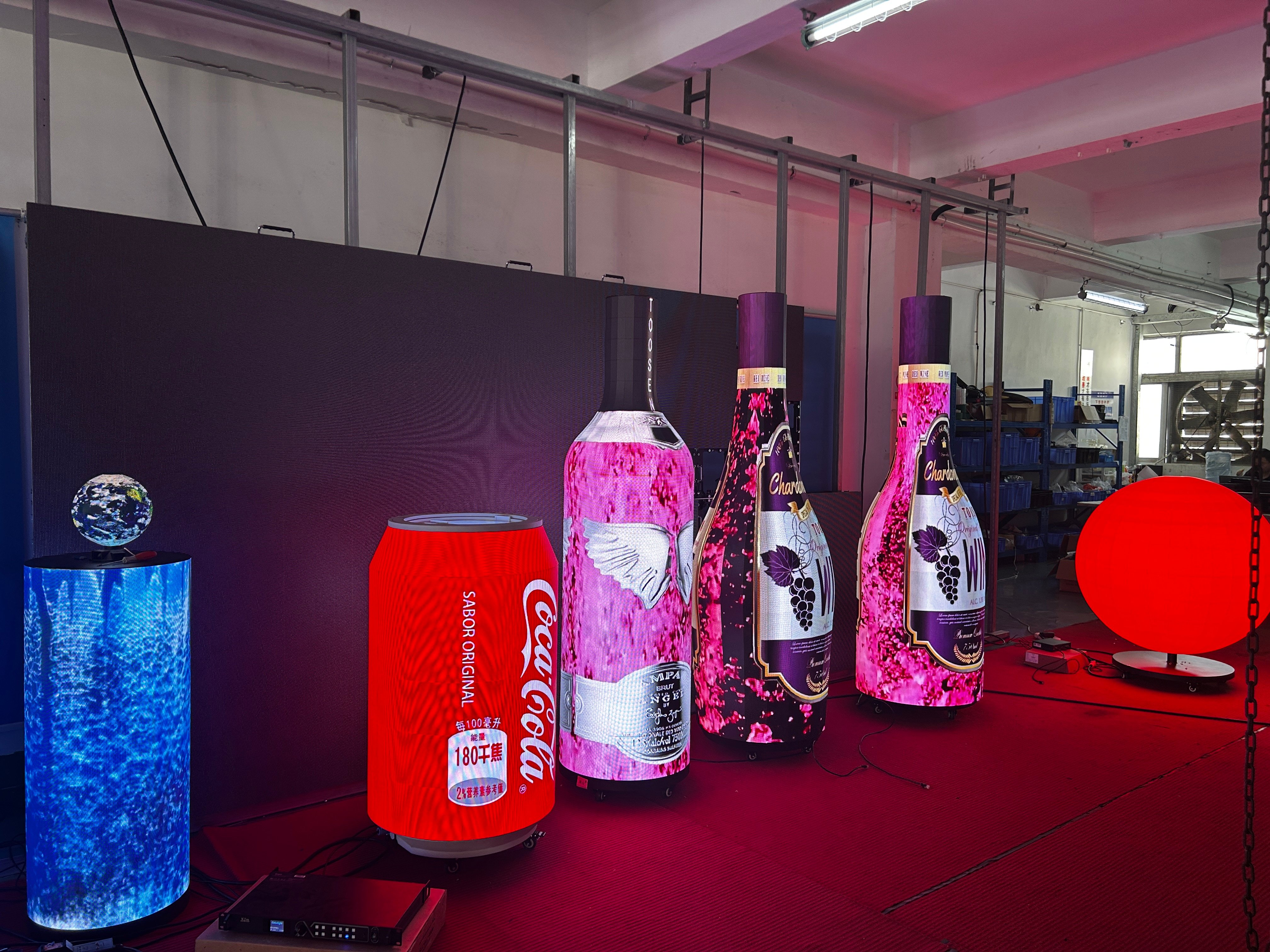
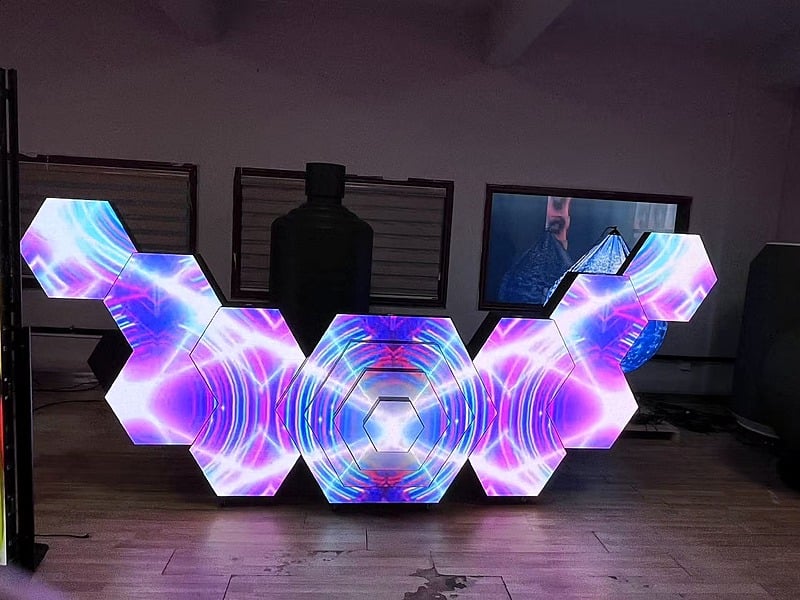
For irregular-shaped LED displays, including spherical, cylindrical, and other customized screens, the case may require specially shaped internal supports. Standard rectangular foam layouts may not provide sufficient protection.
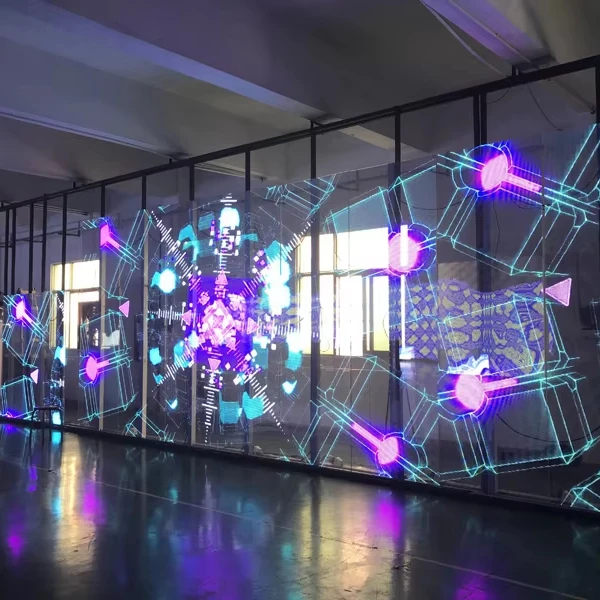
For transparent LED displays, the packaging should protect delicate structural parts and connectors while avoiding unnecessary pressure on the display surface.
The final design should consider cabinet dimensions, total weight, loading direction, and transportation frequency.
Consider an event company that uses rental LED display cabinets for exhibitions and stage performances. The equipment travels between different venues several times each month.
Initially, the company uses standard wooden packaging. During transportation, some cabinets move inside the packaging, causing scratches and occasional connector problems.
After reviewing the cabinet dimensions and loading process, the company switches to customized flight cases with individual compartments, corner protection, and reinforced external structures.
The improved packaging makes loading more organized and reduces unnecessary contact between cabinets. It also helps the technical team check and manage equipment more efficiently.
This example shows why flight case planning should be included in the overall LED display transportation process.
Q1: What material is best for an LED display flight case?
Plywood panels, aluminum profiles, and shock-absorbing foam are commonly used. The right combination depends on cabinet weight, transportation frequency, and protection requirements.
Q2: Can one flight case fit different LED cabinet sizes?
It is possible, but the internal compartments must be designed carefully. Adjustable dividers or removable foam inserts can improve flexibility.
Q3: How many LED cabinets can one flight case hold?
This depends on cabinet dimensions, weight, stacking arrangement, and case load capacity. The design should avoid excessive loading and pressure.
Q4: How often should a flight case be inspected?
Inspect it before important transportation tasks. Pay particular attention to casters, locks, handles, hinges, foam, and structural joints.
At AILEDDISPLAY, we provide LED display solutions for different applications, including indoor and outdoor LED screens, rental displays, spherical LED screens, and customized irregular-shaped displays.
With in-house production, a professional engineering team, and CNC processing capabilities, we focus on product quality, structural accuracy, and practical installation requirements.
We understand that protecting LED cabinets during transportation is an important part of project delivery. By considering cabinet dimensions, structural features, and application requirements, we can help customers evaluate suitable customized packaging solutions.
Whether you are purchasing rental LED screens for events or developing a special-shaped display project, proper transportation planning helps protect your investment and supports more reliable long-term use.
Visit www.aileddisplay.com to explore our LED display solutions and discuss your project requirements.
 Hot News
Copyright © 2025 by Shenzhen Ai Display Technology Co., Ltd - Privacy policy
 EN