When comparing flexible LED display supplier quotations, it is easy to focus on pixel pitch and total price. However, two screens with the same pixel pitch can have very different performance, installation requirements, and service life.
A low quotation may also leave out important accessories, spare modules, or technical support. These missing details can increase the final project cost.
So, how can you compare suppliers more effectively? Here are nine key factors to check before making your decision.
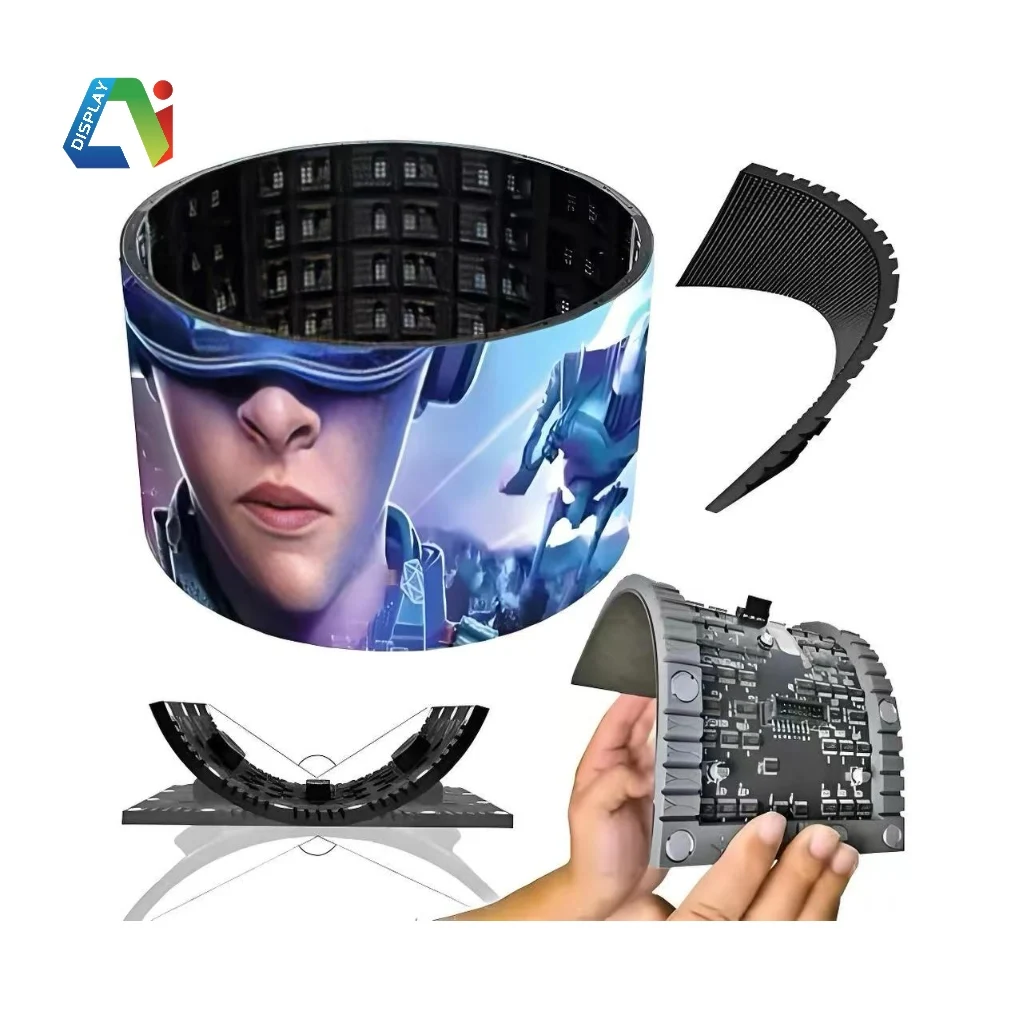
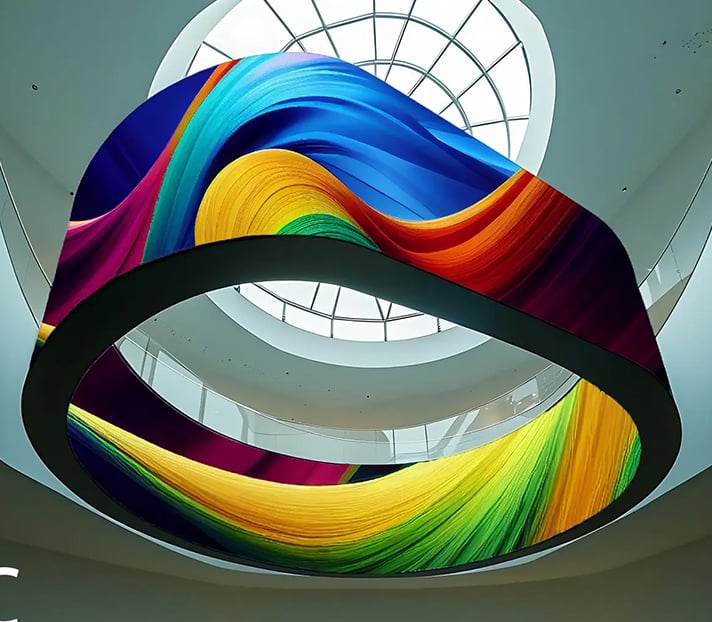
Flexible LED displays are designed for curved walls, cylinders, waves, and other creative shapes. However, not every flexible module supports the same bending radius.
If a supplier cannot meet your required curve, the screen may not fit the structure properly. Forcing modules into an unsuitable shape can also damage components.
Ask each supplier for the minimum bending radius, supported concave and convex shapes, and recommended installation method. Make sure these specifications match your actual design.
Brightness is important, but it is not the only factor that affects image quality. Color consistency, contrast, and uniform brightness also matter.
Poor consistency can make different sections of a curved screen look uneven, especially when displaying large areas of one color. These problems are often more noticeable after installation.
Ask suppliers to explain their color calibration process and provide photos or videos of a complete screen. Do not judge quality from a small sample module alone.
A flexible LED display may look good to the eye but perform poorly when recorded by a camera. This can be a serious issue for stage events, exhibitions, and live broadcasts.
The refresh rate, driving method, receiving cards, and control system all affect the final result. Different configurations can produce different visual performance, even with similar LED modules.
Check the quoted refresh rate and confirm that the control system supports your content and playback requirements. If the display will appear on camera, request a video test under realistic recording conditions.
Flexible modules are only one part of a complete display. The mounting structure, connectors, power supply, and installation method also affect the finished screen.
An unsuitable structure can create uneven surfaces, visible gaps, or unnecessary installation work. For custom-shaped displays, these problems may be expensive to correct.
Ask whether the quotation includes mounting frames, connecting parts, power supplies, cables, and other required accessories. Request installation drawings before production so your team can check the design and prepare the site.
Two quotations may list similar brightness and pixel pitch but use different electrical configurations.
Power consumption affects running costs, while heat management influences long-term stability. If the screen operates for many hours each day, these factors become even more important.
Compare average and maximum power consumption, cooling requirements, and the recommended operating environment. Also check whether the proposed power supply is suitable for your screen size and installation conditions.
A lower purchase price may not be the most economical choice over the full operating life of the display.
Maintenance is easy to overlook when comparing initial prices. However, a failed module or power supply can interrupt business operations if replacement parts are unavailable.
Ask how the display is maintained and whether modules can be replaced individually. Check the recommended spare-module quantity, spare-part pricing, and availability of compatible components.
For permanent installations, also confirm whether maintenance can be performed from the front or rear. Choosing the right maintenance method can save time and labor later.
A supplier's technical specifications are useful, but they do not prove that the finished display performs as expected.
Before confirming an order, ask what tests are included in the quotation. A practical inspection should cover dead pixels, color uniformity, brightness, signal stability, and continuous operation.
For flexible screens, also check the bending performance, module connections, and surface alignment under the intended configuration.
Request a factory acceptance test, including photos or videos of the assembled display. For large or customized projects, agree on the acceptance criteria before production begins.
Product photos can show what a flexible LED display looks like, but they may not explain how it performs in a real installation.
Ask suppliers for examples of similar projects, such as curved retail displays, cylindrical screens, stage installations, or automotive showrooms. These examples can help you understand the practical installation requirements.
Also check whether the supplier can provide technical drawings, installation guidance, and remote support. A supplier familiar with your application is more likely to identify design problems before manufacturing starts.
FAQ: Should you always choose the supplier with the lowest price?
No. Compare the complete scope of supply, product specifications, testing standards, warranty, and support. A slightly higher quotation may offer better value if it reduces installation risks and future maintenance costs.
Finally, check who will take responsibility if something goes wrong.
Confirm the warranty period, what it covers, how replacement parts are supplied, and how quickly technical questions can be answered. Ask whether the supplier is a manufacturer or a trading company, and whether it can handle customization and repeat orders.
A reliable supplier should provide clear answers rather than vague promises. You should also confirm the production schedule, delivery terms, and communication process before placing your order.
Shenzhen Ai Display Technology Co., Ltd. provides LED display solutions for applications including events, retail spaces, automotive showrooms, and custom-shaped installations. Its flexible LED display solutions support creative curved designs, while its OEM/ODM services help customers develop displays for different project requirements.
You can learn more about its products and services at www.aileddisplay.com.
Comparing flexible LED display quotations is about more than finding the lowest price. Module flexibility, image quality, control systems, installation structure, power consumption, maintenance, testing, technical support, and warranty all affect the final result.
Before choosing a supplier, make sure every quotation covers the same project requirements. Ask questions, request evidence, and confirm important details in writing.
The right supplier should offer more than a screen. It should provide a practical solution that fits your design, budget, and long-term operating needs.
 Hot News
2026-10-20
2026-10-19
2026-10-17
Copyright © 2025 by Shenzhen Ai Display Technology Co., Ltd - Privacy policy
 EN