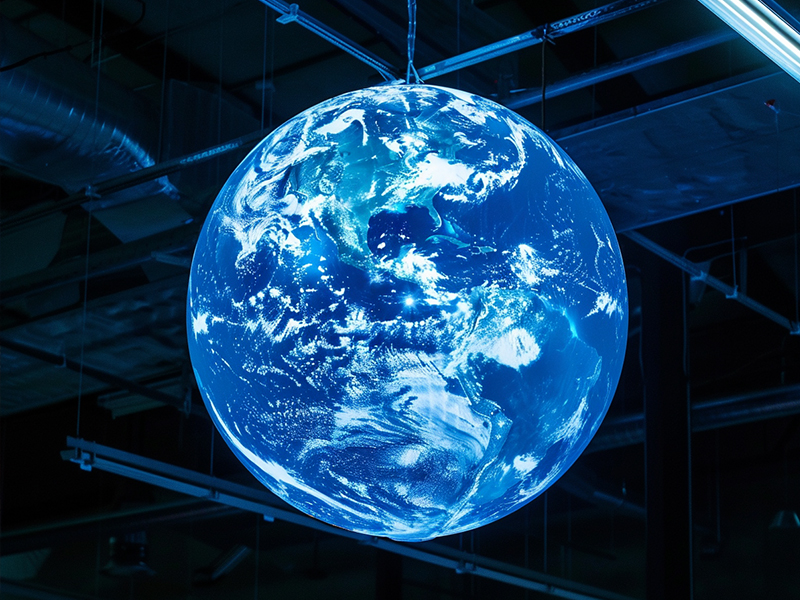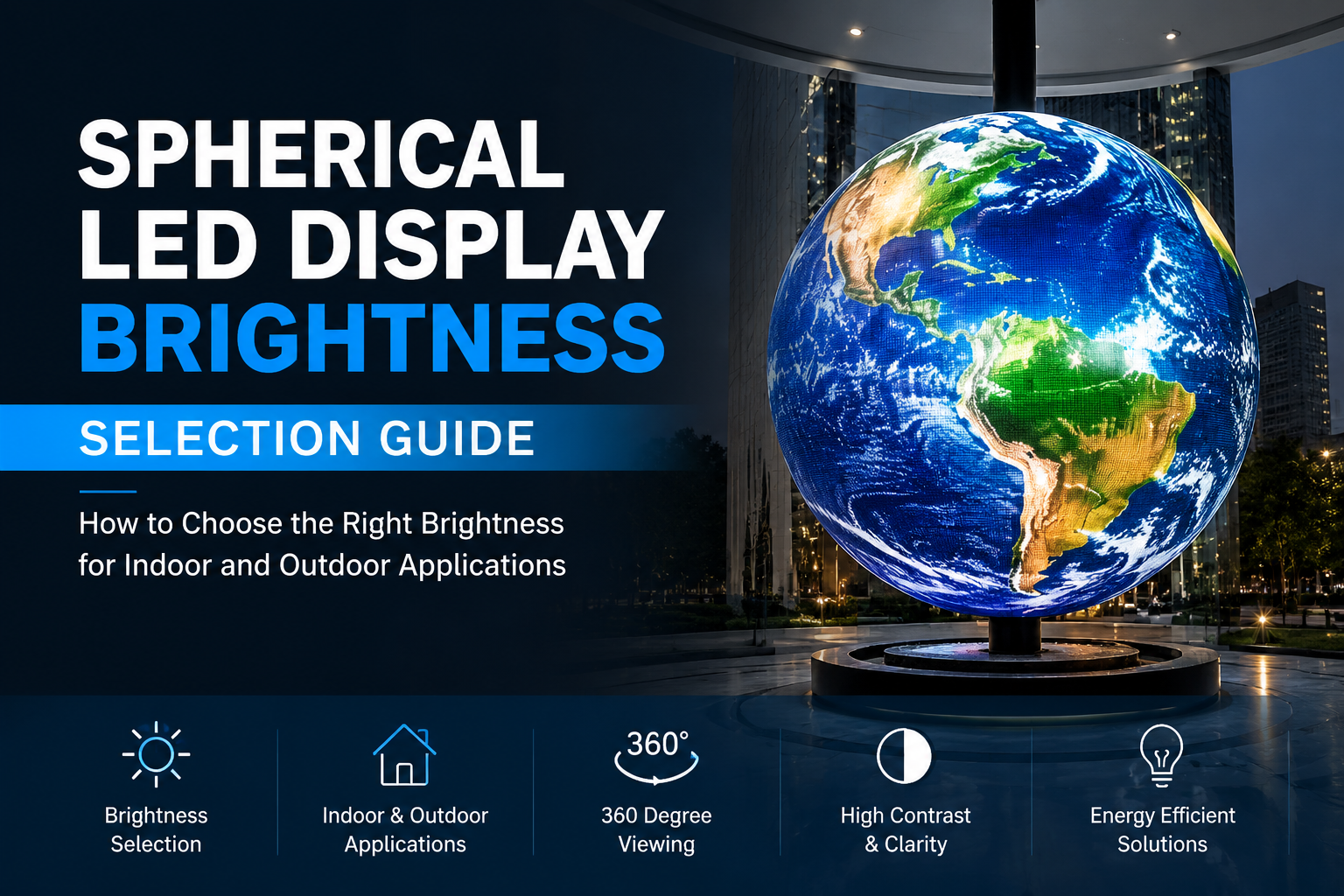
Brightness is one of the most important factors when selecting a Spherical LED Display. A suitable brightness level determines whether the content can be clearly displayed, whether colors remain accurate, and whether viewers have a comfortable viewing experience.
Unlike traditional flat LED screens, spherical LED displays provide a 360-degree viewing experience. Because audiences can watch the screen from different directions, brightness consistency and light distribution become more important.
Many customers focus mainly on pixel pitch or sphere size when purchasing an LED globe display, but brightness selection is equally critical. Choosing the wrong brightness may result in poor visibility outdoors or unnecessary energy consumption indoors.
This guide explains how to choose the right Spherical LED Display Brightness based on application, environment, viewing distance, and installation conditions.
LED display brightness is usually measured in nits (cd/㎡), which indicates the amount of light produced by the LED surface.
For spherical LED screens, brightness affects several important factors:
A higher brightness level does not always mean better performance. The correct brightness depends on where the LED sphere is installed and how the audience views the display.
For example, an indoor spherical LED display used in a museum does not need the same brightness as an outdoor LED globe installed in direct sunlight.
Professional spherical LED solutions usually offer different brightness options, commonly ranging from around 800cd/㎡ for indoor applications to 6000cd/㎡ or higher for outdoor environments.

A major advantage of a spherical LED display is its ability to show content from every direction.
However, this also creates higher requirements for brightness uniformity.
Traditional LED walls mainly focus on front viewing, while LED sphere displays must maintain consistent image quality across the curved surface.
A high-quality spherical LED display should provide:
This is especially important for large outdoor LED spheres installed in public areas, where viewers may stand at different positions around the display.
The required brightness of an LED sphere depends mainly on the installation environment.
| Application | Environment | Recommended Brightness |
|---|---|---|
| Museum LED Sphere | Indoor low-light environment | 800–1200 cd/㎡ |
| Exhibition LED Globe | Indoor exhibition area | 1000–1500 cd/㎡ |
| Shopping Mall Sphere Display | Bright indoor environment | 1500–2500 cd/㎡ |
| Outdoor Advertising Sphere | Outdoor sunlight | 5000–6000 cd/㎡ |
| Landmark Outdoor LED Sphere | Strong sunlight | 6000 cd/㎡+ |
Choosing the correct brightness helps achieve the best balance between image quality, energy efficiency, and long-term reliability.
Indoor environments usually have controlled lighting conditions, so extremely high brightness is unnecessary.
Common indoor applications include:
For these applications, a brightness level between 800 and 1500cd/㎡ is usually suitable.
A lower brightness level provides several advantages:
For close-viewing environments, pixel pitch selection is also important. Fine pixel pitch solutions such as P1.2, P1.5, or P1.9 can provide clearer images when audiences are close to the spherical LED display.
Outdoor environments create more challenges because LED screens must compete with natural sunlight.
Factors affecting brightness requirements include:
For outdoor applications, a spherical LED display usually requires higher brightness, commonly around 5000–6000cd/㎡.
Typical outdoor applications include:
A professional outdoor spherical LED display should also include:
High brightness allows the screen content to remain visible during daytime operation while maintaining good image quality at night through brightness adjustment.
Brightness should not be selected separately. Several other factors influence the final requirement.
Viewing distance directly affects brightness requirements.
For example:
A professional supplier should evaluate the complete project environment rather than recommending the highest brightness option.
The size of the LED sphere also affects brightness selection.
Small spherical LED displays are often used indoors for exhibitions and commercial decoration.
Large LED globe displays are usually installed outdoors as landmarks or advertising displays and require stronger brightness output.
The surrounding lighting environment is another key factor.
A sphere installed in:
will require different brightness levels.
Understanding the environment helps prevent both insufficient brightness and excessive brightness.
Some buyers believe higher brightness always creates better display performance. However, excessive brightness can cause several problems.
Higher brightness requires more electrical power, increasing operating costs.
Higher LED output produces more heat, which may affect long-term stability.
Extremely bright screens in indoor environments may cause eye discomfort and reduce the viewing experience.
The best solution is not choosing the highest brightness, but selecting the brightness level that matches the actual application.
When selecting brightness for a spherical LED display, consider the following factors:
A professional LED display manufacturer can recommend the right brightness configuration based on the project requirements.
With customized solutions, different pixel pitches, sphere sizes, and brightness options can be combined to create the most suitable LED sphere display for each application.
Choosing the correct Spherical LED Display Brightness is essential for achieving clear images, accurate colors, and reliable operation.
Indoor spherical LED displays generally require moderate brightness levels, while outdoor LED spheres need higher brightness to overcome sunlight and maintain visibility.
The ideal brightness level is not simply the highest value available. It should match the installation environment, viewing distance, and application requirements.
Ai Display focuses on customized LED display solutions, By selecting the right brightness, customers can achieve better visual performance, lower energy consumption, and a longer service life for their spherical LED display.
Most indoor spherical LED displays require around 800–1500cd/㎡, while outdoor LED spheres usually require 5000cd/㎡ or higher.
Outdoor LED sphere screens typically need 5000–6000cd/㎡ to remain visible under direct sunlight.
Copyright © 2025 by Shenzhen Ai Display Technology Co., Ltd - Privacy policy