Como o nome sugere, um Tela de piso de led é uma tela LED instalada diretamente no solo, como um piso digital. Diferentemente das telas LED tradicionais, que servem principalmente como sistemas visuais montados em paredes ou suspensos, as telas LED para pisos devem suportar constantemente o tráfego de pedestres e cargas pesadas. Por isso, os fabricantes as projetam com alta capacidade de carga, superfícies antiderrapantes, resistência a impactos e proteção robusta contra água e poeira.
Devido a essas características especializadas, as telas LED para pisos tornaram-se cada vez mais populares em palcos, feiras, shoppings, espaços de entretenimento imersivo e ambientes comerciais interativos.
A maior diferença entre telas LED para pisos e telas LED padrão reside em seu projeto estrutural e em suas capacidades interativas.
As telas LED tradicionais concentram-se principalmente no brilho, na resolução e nos ângulos de visualização, pois normalmente são instaladas em paredes ou estruturas suspensas. As telas LED para piso, no entanto, devem suportar pressão direta de pedestres, equipamentos de palco e, por vezes, até mesmo veículos.
Por exemplo, as telas LED para piso da Toosen suportam cargas de até 1 tonelada por metro quadrado, tornando-as adequadas para concertos, exposições e ambientes públicos de alto tráfego.
Para alcançar essa durabilidade, os fabricantes utilizam:
Ao mesmo tempo, a superfície protetora também melhora o desempenho antiderrapante e evita arranhões durante o uso prolongado.
As telas LED para piso geralmente estão disponíveis em duas versões:
As telas não interativas de piso funcionam principalmente como displays LED tradicionais, com proteção adicional contra cargas. Já as telas interativas de piso incluem sistemas de detecção embutidos ou externos que permitem interação em tempo real entre as pessoas e o conteúdo exibido.
Por exemplo, as telas interativas de piso LED da Toosen suportam tanto sensores embutidos quanto sistemas externos de detecção por radar. O sistema externo de radar oferece um raio de varredura aproximado de 6 metros, com uma unidade de radar capaz de cobrir até 30 metros quadrados. O sistema responde de forma rápida e precisa, permitindo interação sincronizada entre as pessoas e os efeitos na tela.
Como resultado, os usuários podem acionar efeitos visuais dinâmicos simplesmente ao caminhar, pular ou se movimentar sobre a superfície da tela.
As telas interativas de piso LED funcionam por meio de tecnologia de detecção de pressão instalada sob ou ao redor dos módulos LED.
Os fabricantes colocam sensores de filme flexível sob a superfície da tela. Quando alguém pisa na tela, a pressão é transmitida através da camada protetora temperada e ativa o sensor localizado abaixo.
O sensor converte então a deformação física em sinais elétricos, como alterações de tensão ou corrente. Após receber esses sinais, o sistema de controle LED processa imediatamente a localização e a intensidade da pressão.
Por fim, os circuitos integrados do controlador de tela ativam os pixels LED correspondentes para gerar efeitos visuais interativos, tais como:
Esse processo cria uma interação em tempo real altamente imersiva.
Telas LED convencionais recebem apenas sinais de imagem e vídeo de dispositivos como computadores ou servidores multimídia. Sua função concentra-se principalmente na exibição de conteúdo visual.
As telas LED para pisos, no entanto, processam transmissão de dados bidirecional.
Além de receber sinais de vídeo, as telas interativas de piso também enviam dados de localização e intensidade da pressão de volta ao sistema de controle. O sistema, então, analisa os dados de movimento e gera respostas visuais correspondentes em tempo real.
Devido a essa estrutura de comunicação bidirecional, as telas de piso LED exigem sistemas de controle mais avançados do que os displays LED comuns.
As telas de piso LED normalmente utilizam três principais métodos de instalação, sendo que cada um se adapta a diferentes aplicações.
A instalação em superfície posiciona a tela de piso LED diretamente sobre a estrutura do piso.
Este método funciona bem para:
A instalação embutida integra a tela LED de piso na estrutura do piso, de modo que a exibição fique nivelada com a superfície circundante.
Este estilo de instalação é ideal para:
Sistemas com estrutura fixa utilizam estruturas de suporte reforçadas para fixar firmemente a tela no piso.
Este método ocorre comumente em:
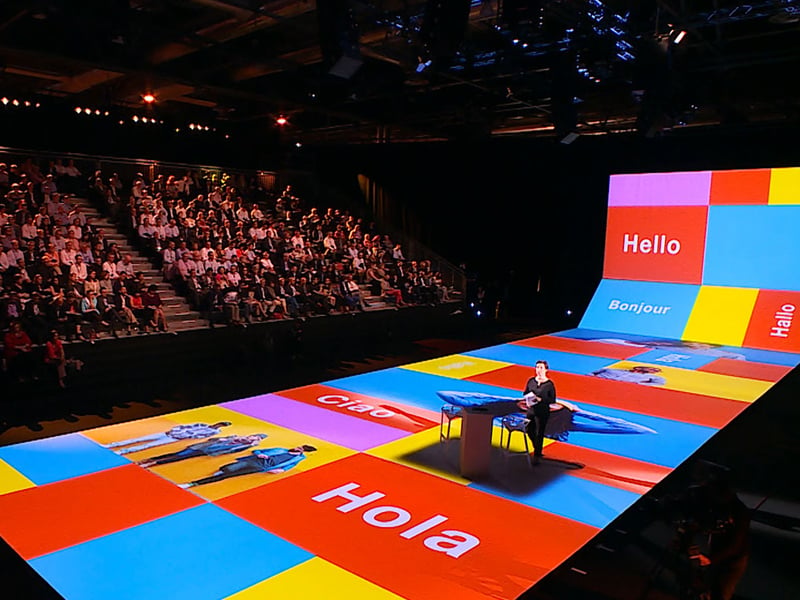
Telas LED de piso criam entradas visualmente marcantes e efeitos interativos de palco para desfiles de moda, programas de TV e apresentações ao vivo. As imagens dinâmicas no piso melhoram significativamente o engajamento do público e a apresentação cênica.
Organizadores de concertos frequentemente utilizam telas LED de piso como plataforma principal do palco. As telas sincronizam-se com os ritmos musicais para exibir efeitos luminosos animados, letras de músicas e visuais interativos de desempenho.
Artistas e dançarinos também podem acionar, em tempo real, efeitos como explosões, ondulações ou transições luminosas por meio de seus movimentos.
Lojas varejistas e espaços de exposição instalam frequentemente telas LED de piso nas entradas ou em áreas centrais de exibição para atrair visitantes e aumentar a interação com os clientes.
Por exemplo, pisar em áreas específicas pode acionar:
Essa experiência interativa ajuda as marcas a fortalecerem o engajamento dos clientes, ao mesmo tempo que criam um ambiente de compras mais memorável.
Em comparação com os displays LED tradicionais, as telas de chão LED oferecem muito mais do que simples reprodução visual. Suas estruturas robustas, sistemas interativos de detecção, proteção antiderrapante e capacidades visuais imersivas tornam-nas ideais para aplicações modernas em entretenimento, varejo, exposições e palcos.
À medida que as experiências digitais interativas continuam ganhando popularidade, telas LED para piso desempenharão um papel cada vez mais importante na criação de ambientes envolventes que combinam tecnologia, criatividade e participação do público.
Seja para eventos temporários ou instalações permanentes, escolher o método de instalação e a solução interativa adequados pode melhorar significativamente tanto o impacto visual quanto a experiência do usuário.
 Notícias Quentes
2026-10-20
2026-10-19
2026-10-17
Copyright © 2025 by Shenzhen Ai Display Technology Co., Ltd - POLÍTICA DE PRIVACIDADE
 EN
EN