Wie der Name bereits sagt, ist eine LED-Bodenbildschirm ist eine LED-Anzeige, die direkt am Boden wie ein digitaler Fußboden installiert wird. Im Gegensatz zu herkömmlichen LED-Anzeigen, die hauptsächlich als wandmontierte oder aufgehängte visuelle Systeme dienen, müssen LED-Bodenbildschirme ständigen Fußgängerverkehr und hohe Lasten aushalten. Daher werden sie von den Herstellern mit hoher Tragfähigkeit, rutschhemmenden Oberflächen, Stoßfestigkeit sowie starkem Wasserschutz und Staubschutz ausgelegt.
Aufgrund dieser speziellen Merkmale haben sich LED-Bodenbildschirme zunehmend in Bühnen, Ausstellungen, Einkaufszentren, immersiven Unterhaltungsstätten und interaktiven kommerziellen Räumen durchgesetzt.
Der größte Unterschied zwischen LED-Bodenbildschirmen und Standard-LED-Anzeigen liegt in ihrem strukturellen Aufbau und ihren interaktiven Funktionen.
Traditionelle LED-Anzeigen konzentrieren sich hauptsächlich auf Helligkeit, Auflösung und Blickwinkel, da sie üblicherweise an Wänden oder hängenden Konstruktionen installiert werden. LED-Bodenbildschirme müssen dagegen direkten Druck durch Fußgänger, Bühnenausrüstung und manchmal sogar Fahrzeuge aushalten.
Beispielsweise unterstützen die LED-Bodenbildschirme von Toosen Lasten von bis zu einer Tonne pro Quadratmeter und eignen sich daher für Konzerte, Ausstellungen sowie stark frequentierte öffentliche Umgebungen.
Um diese Robustheit zu erreichen, verwenden Hersteller:
Gleichzeitig verbessert die schützende Oberfläche auch die Rutschfestigkeit und verhindert Kratzer bei langfristiger Nutzung.
LED-Bodenbildschirme sind im Allgemeinen in zwei Versionen erhältlich:
Nicht-interaktive Bodenbildschirme funktionieren hauptsächlich wie herkömmliche LED-Displays mit zusätzlicher lasttragender Schutzfunktion. Interaktive Bodenbildschirme hingegen verfügen über integrierte oder externe Sensorsysteme, die eine Echtzeit-Interaktion zwischen Personen und den angezeigten Inhalten ermöglichen.
Beispielsweise unterstützen Toosens interaktive LED-Bodenbildschirme sowohl integrierte Sensoren als auch externe Radarsensorsysteme. Das externe Radarsystem bietet einen ungefähren Abtastungsradius von 6 Metern, wobei eine Radareinheit jeweils 30 Quadratmeter abdeckt. Das System reagiert schnell und präzise und ermöglicht eine synchronisierte Interaktion zwischen Personen und den Bildschirmeffekten.
Dadurch können Benutzer dynamische visuelle Effekte allein durch Gehen, Springen oder Bewegen über die Bildschirmoberfläche auslösen.
Interaktive LED-Bodenbildschirme funktionieren mittels Drucksensortechnologie, die unterhalb oder um die LED-Module herum installiert ist.
Hersteller platzieren flexible Filmsensoren unterhalb der Bildschirmoberfläche. Wenn jemand auf das Display tritt, wird der Druck durch die gehärtete Schutzschicht übertragen und aktiviert den darunterliegenden Sensor.
Der Sensor wandelt dann die physikalische Verformung in elektrische Signale wie Spannungs- oder Stromänderungen um. Nachdem das LED-Steuerungssystem diese Signale empfangen hat, verarbeitet es unverzüglich Ort und Intensität des Drucks.
Schließlich aktivieren die Display-Treiberchips entsprechende LED-Pixel, um interaktive visuelle Effekte zu erzeugen, beispielsweise:
Dieser Prozess erzeugt eine hochgradig immersive Echtzeit-Interaktion.
Gewöhnliche LED-Displays empfangen lediglich Bild- und Videosignale von Geräten wie Computern oder Medienservern. Ihre Funktion konzentriert sich hauptsächlich auf die Darstellung visueller Inhalte.
LED-Bodenbildschirme hingegen verarbeiten eine bidirektionale Datenübertragung.
Neben dem Empfang von Videosignalen senden interaktive Bodenbildschirme auch Druckort- und Kraftdaten an das Steuerungssystem zurück. Das System analysiert dann die Bewegungsdaten und erzeugt in Echtzeit passende visuelle Reaktionen.
Aufgrund dieser bidirektionalen Kommunikationsstruktur erfordern LED-Bodenbildschirme fortschrittlichere Steuerungssysteme als herkömmliche LED-Anzeigen.
LED-Bodenbildschirme verwenden üblicherweise drei Hauptinstallationsmethoden, wobei jede Methode für unterschiedliche Anwendungen geeignet ist.
Bei der Oberflächenmontage wird der LED-Bodenbildschirm direkt auf die Untergrundkonstruktion aufgesetzt.
Diese Methode eignet sich gut für:
Beim Einbausystem wird der LED-Bodenbildschirm in die Bodenkonstruktion eingelassen, sodass das Display bündig mit der umgebenden Oberfläche abschließt.
Diese Montageart eignet sich am besten für:
Rahmenfeste Systeme verwenden verstärkte Tragstrukturen, um den Bodenbildschirm fest zu verankern.
Diese Methode kommt häufig vor bei:
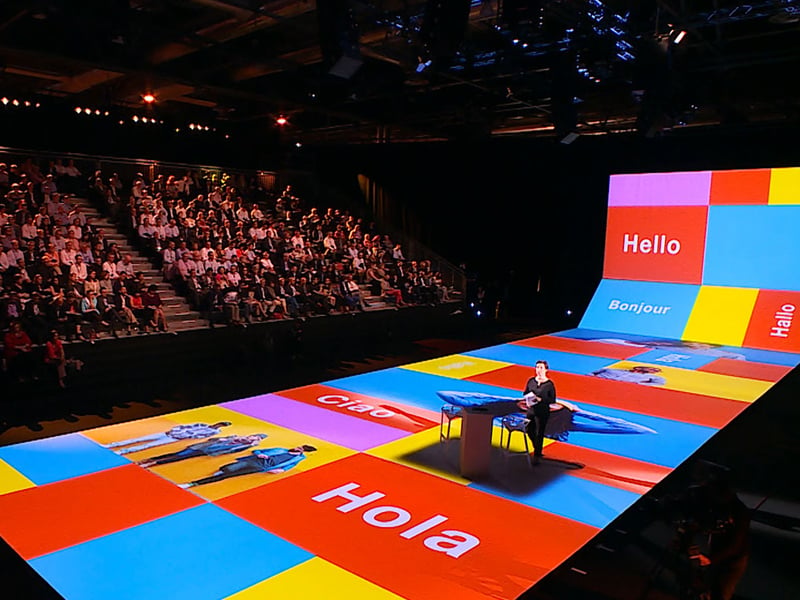
LED-Bodenbildschirme erzeugen optisch beeindruckende Eingänge und interaktive Bühneneffekte für Modenschauen, Fernsehprogramme und Live-Auftritte. Dynamische Bodenvisualisierungen steigern die Zuschauerbindung und verbessern die Bühnenpräsentation deutlich.
Konzerthveranstalter nutzen LED-Bodenbildschirme häufig als Hauptbühnenplattform. Die Bildschirme synchronisieren sich mit dem Musikrhythmus, um animierte Lichteffekte, Songtexte und interaktive Darstellungsvisualisierungen anzuzeigen.
Darsteller und Tänzer können durch ihre Bewegung zudem in Echtzeit Effekte wie Explosionen, Wellen oder Lichtübergänge auslösen.
Einzelhandelsgeschäfte und Ausstellungsräume installieren LED-Bodenbildschirme häufig an Eingängen oder zentralen Präsentationsflächen, um Besucher anzuziehen und die Kundeninteraktion zu erhöhen.
Beispielsweise kann das Betreten bestimmter Bereiche Folgendes auslösen:
Diese interaktive Erfahrung hilft Marken dabei, das Kundenengagement zu stärken und gleichzeitig eine einprägsamere Einkaufsumgebung zu schaffen.
Im Vergleich zu herkömmlichen LED-Displays bieten LED-Bodenbildschirme weit mehr als nur einfache visuelle Wiedergabe. Ihre robusten Konstruktionen, interaktiven Sensorsysteme, rutschfeste Schutzvorrichtungen sowie ihre immersiven visuellen Fähigkeiten machen sie ideal für moderne Unterhaltungs-, Einzelhandels-, Ausstellungs- und Bühnenanwendungen.
Da interaktive digitale Erlebnisse weiterhin an Beliebtheit gewinnen, werden LED-Bodenbildschirme zunehmend eine wichtige Rolle bei der Schaffung ansprechender Umgebungen spielen, die Technologie, Kreativität und die aktive Beteiligung des Publikums vereinen.
Ob für temporäre Veranstaltungen oder dauerhafte Installationen – die Wahl der richtigen Installationsmethode und der passenden interaktiven Lösung kann sowohl die visuelle Wirkung als auch das Benutzererlebnis erheblich verbessern.
 Aktuelle Nachrichten
2026-10-20
2026-10-19
2026-10-17
Copyright © 2025 by Shenzhen Ai Display Technology Co., Ltd - DATENSCHUTZRICHTLINIE
 EN
EN