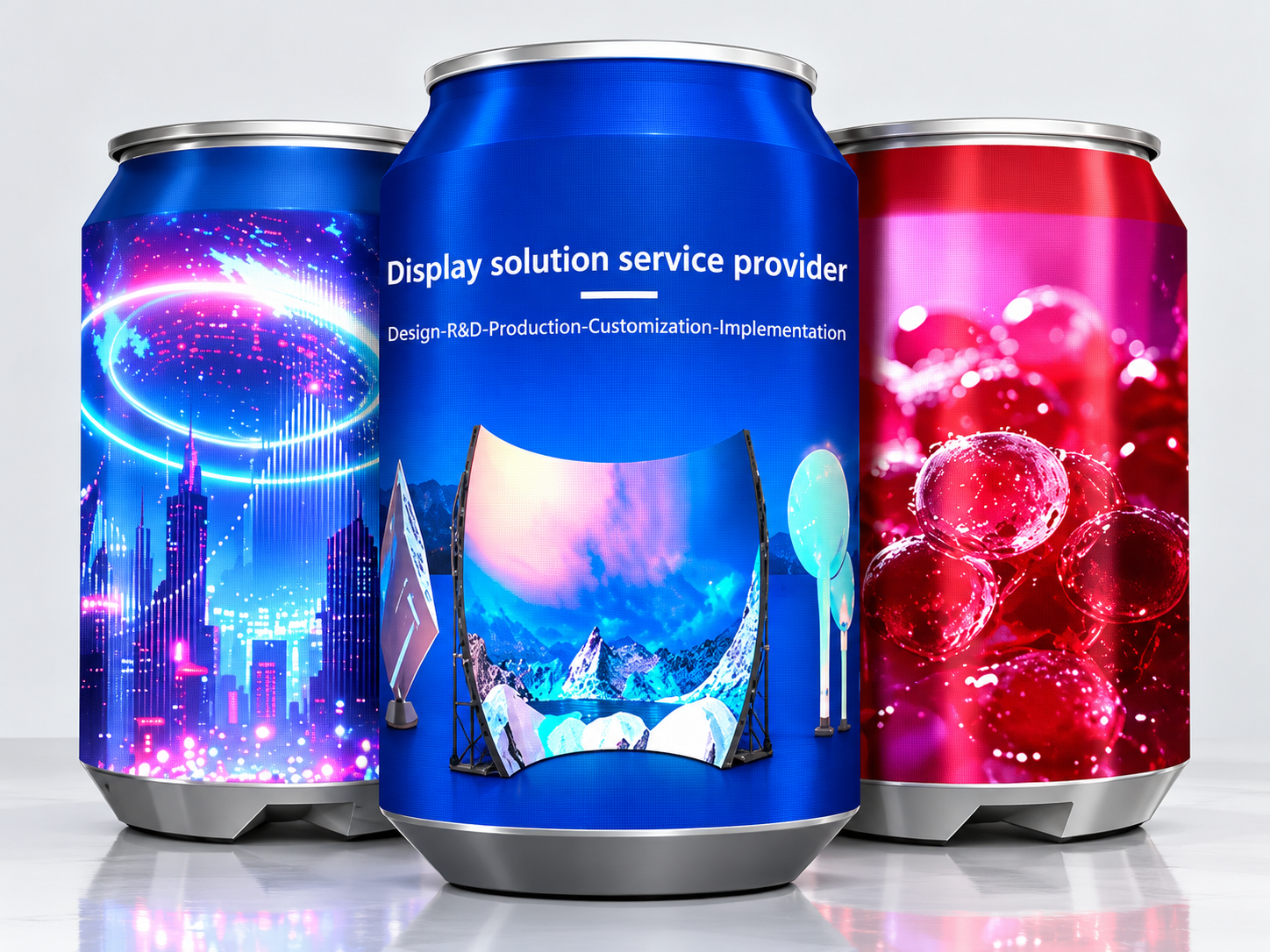
A bottle-shaped LED display can become a strong visual feature in a restaurant. It can show a beverage brand, seasonal promotion, menu message, animation, or decorative content while matching the atmosphere of the space.
But a restaurant is different from an exhibition hall or shopping mall.
Guests may sit only a few meters away from the screen for one or two hours. If the display is too bright, too large, or placed in the wrong position, it can quickly become uncomfortable. A badly designed bottle-shaped LED screen may also block the view of the bar, windows, open kitchen, or interior decoration.
For this reason, restaurant LED display design should balance visibility with comfort.
A bottle-shaped screen naturally attracts attention because its outline is different from a normal rectangular LED display.
This is useful for branding, but too much visual impact can create problems.
For example, a screen beside a dining table may continuously show fast-moving video. Guests may notice the changing light in their peripheral vision even when they are not looking directly at the display.
The problem becomes more obvious in restaurants with warm and relatively low lighting.
A screen that looks normal inside a bright workshop can appear extremely bright after installation.
The goal is therefore not to make the screen attract attention every second. It should become part of the restaurant environment.
The location should be confirmed before deciding the final dimensions of the customized LED display.
Important positions to check include:
restaurant entrance
reception area
bar counter
wine display area
waiting area
wall beside dining tables
open kitchen entrance
A bottle-shaped LED display near an entrance can normally use stronger visual content because customers pass it for only a short time.
A display beside dining tables needs more control.
Before production, designers should check the viewing direction from several seats. The screen should not completely cover important architectural features such as windows, shelves, artwork, or the open kitchen.
The bottle should add another visual layer rather than become a visual wall.
One common mistake is making the bottle body too wide.
A wide display gives more pixels and more content space, but it also occupies more of the restaurant interior.
Instead of asking only, “How large can the screen be?” designers should ask:
How much of the background should remain visible around the screen?
This is especially important when the bottle-shaped display is installed in the middle of an open space.
The neck, shoulder, body, and base of the bottle should have clear proportions. A slimmer structure usually creates less visual pressure and allows customers to continue seeing the interior behind or around it.
For freestanding installations, the rear support structure should also be kept as compact as possible.
Brightness should be tested under the restaurant's real lighting conditions.
During daytime, sunlight from windows may require higher LED brightness. During dinner service, however, the restaurant may reduce the ambient lighting significantly.
Using the same brightness level throughout the day can make the screen uncomfortable at night.
A better solution is to prepare several brightness settings.
For example:
Daytime mode: higher brightness for strong ambient light.
Evening mode: lower brightness for normal dining.
Late-night mode: softer brightness for bars, lounges, or dark interiors.
Automatic brightness adjustment can also be considered when lighting conditions change significantly.
The important point is that maximum brightness is not the design target. Comfortable visibility is.
Even a low-brightness LED display can distract diners if the animation changes too quickly.
Restaurant content should normally use slower movements.
Suitable content may include:
slow bottle rotation
gentle color transitions
brand logo animation
beverage information
simple promotional messages
seasonal decorative graphics
Fast flashes, rapid scene changes, and high-contrast white transitions should be limited, especially near tables.
Content should also follow the bottle shape. Important text and logos should remain inside the wider central display area rather than being placed near the narrow neck or curved edges.
Testing should not be done only from directly in front of the screen.
Before final approval, place the screen or a full-size mock-up in approximately the planned position.
Then check it from several locations.
Sit at nearby tables and observe whether the display creates glare.
Check whether customers can still see important interior areas.
Look at the screen from the entrance, bar, aisle, and waiting area.
The team should also test white, dark, colorful, and moving content.
A useful test is to play the planned content for 15 to 20 minutes while sitting at the closest table. Problems that are difficult to notice during a short factory test often become obvious after several minutes.
A customized bottle-shaped LED screen normally requires a special frame, customized modules, power supplies, receiving cards, cables, and maintenance access.
These parts should not destroy the visual effect.
Power cables should be routed through the rear or bottom of the structure whenever possible. Maintenance doors should remain accessible without creating large visible gaps.
If the display is placed near customer circulation areas, the base must also be stable and protected against accidental contact.
For wall-mounted designs, the structure should remain as shallow as practical so the screen does not project too far into the dining space.
Consider a restaurant that wants to install a bottle-shaped LED display beside the bar.
Instead of building a very wide screen, the designer uses a slim bottle profile that leaves the beverage shelves visible on both sides.
The screen runs brighter promotional content during lunch hours.
After evening service begins, brightness is reduced and the content changes to slow-moving brand graphics.
Important logos remain in the center of the bottle body, while the narrow neck uses simple background animation.
The result is a display that attracts attention when customers first enter without continuously competing with conversations and dining.
Yes, but the dimensions should match the available viewing distance and interior space. A smaller customized structure is usually better than filling the entire wall.
Normally no. Brightness should match the actual ambient lighting, especially during evening service.
It is possible, but the narrow area limits readability. Important text and logos are better placed on the wider bottle body.
Yes. They can use floor-standing, wall-mounted, or customized supporting structures depending on the restaurant layout.
A successful bottle-shaped LED display for restaurants should not be designed as an isolated electronic product.
Its dimensions, brightness, content speed, structural depth, viewing angle, and installation position should all respond to the interior around it.
Before production, an experienced customized LED display manufacturer should review drawings, viewing distances, bottle proportions, installation conditions, maintenance access, and content requirements.
The best restaurant LED display is not necessarily the brightest or largest one.
It is the screen that customers notice when it matters—and almost forget about when they return to their meal.
At AILED, we provide creative and custom-shaped LED display solutions for projects including spherical, cylindrical, bottle-shaped, curved, and other irregular LED structures.
During project development, the screen shape, LED modules, control system, supporting structure, wiring, maintenance access, and factory testing can be planned together according to the real installation environment.
For buyers, designers, and AV integrators, the best custom LED solution is not only one that looks impressive on installation day. It should also remain practical to service years later.
Visit AILED Display to learn more about custom-shaped LED display solutions and discuss your project requirements.
 Hot News
2026-09-30
2026-09-29
2026-09-27
Copyright © 2025 by Shenzhen Ai Display Technology Co., Ltd - Privacy policy
 EN
EN