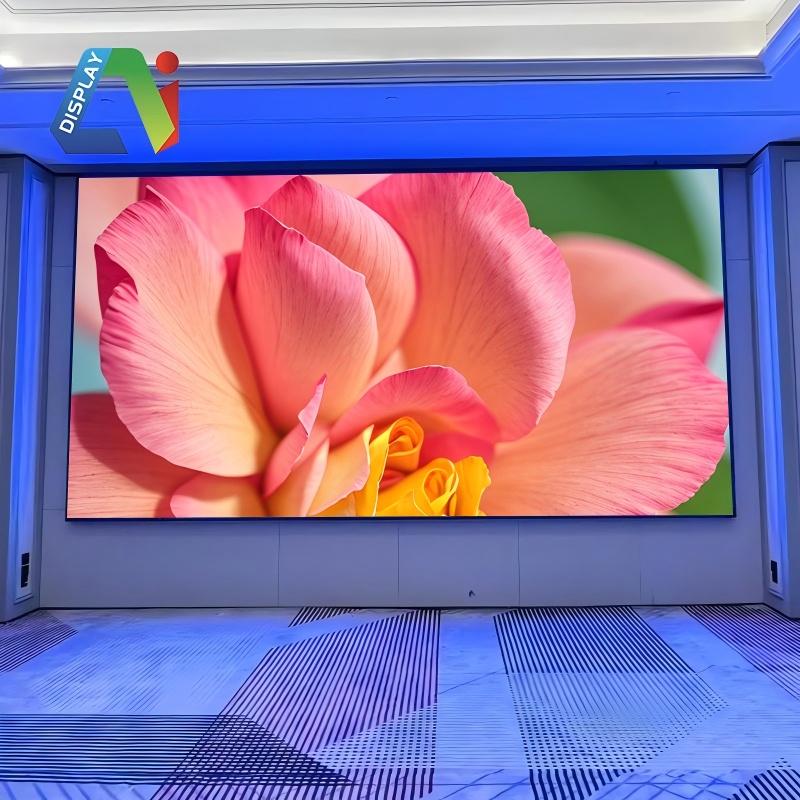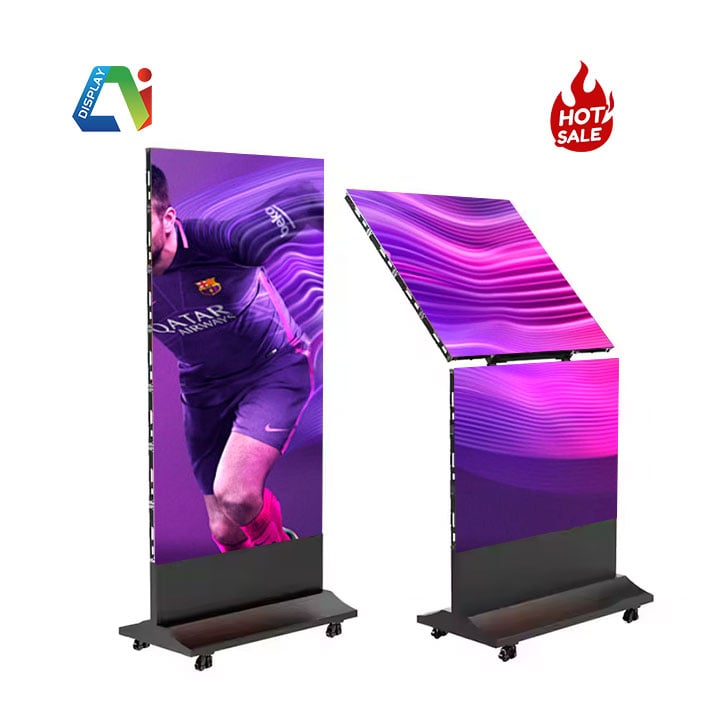
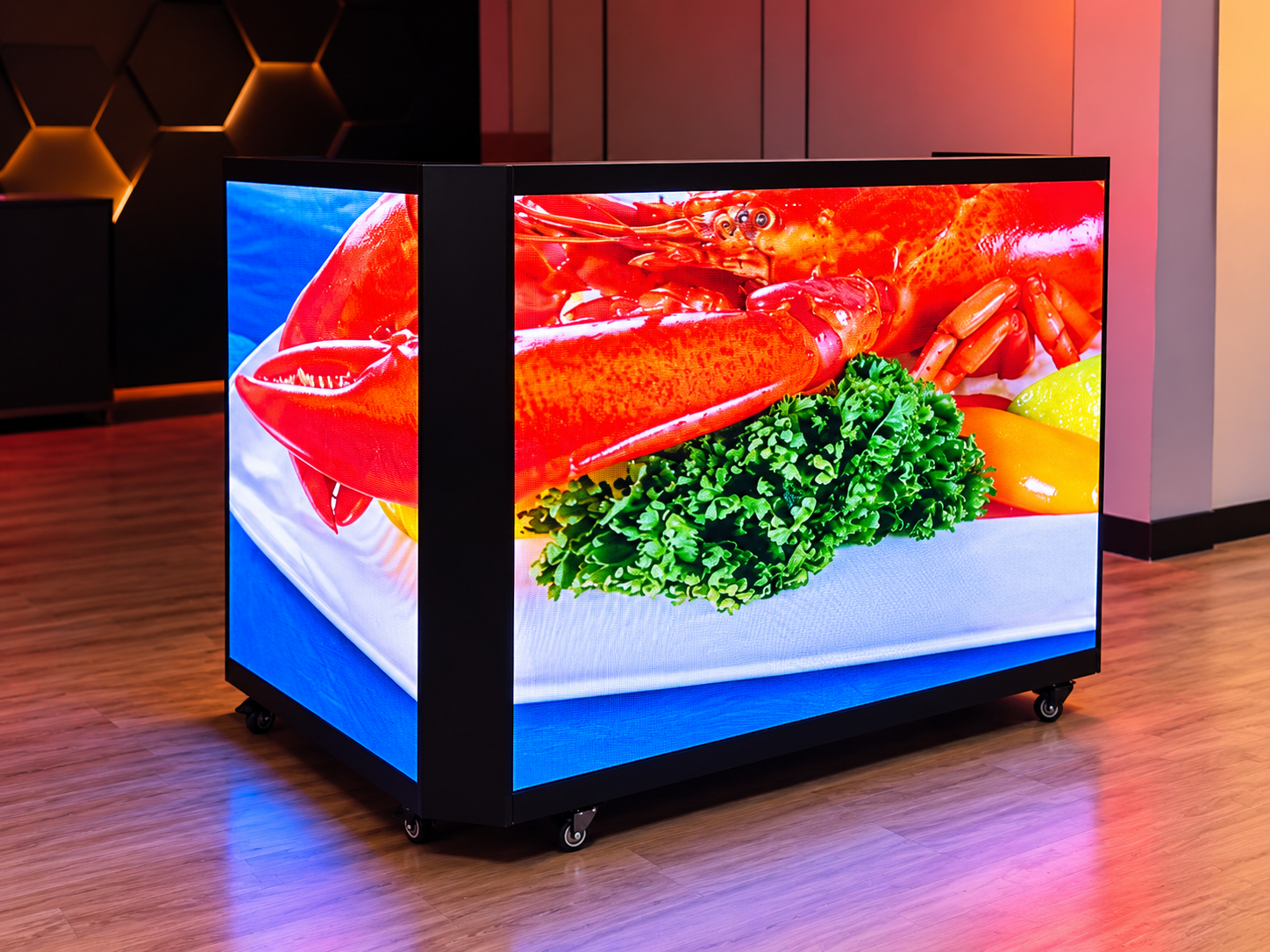
Shaped LED displays are becoming common around DJ front desks in fitness studios, cycling rooms, dance gyms, and boutique training spaces. They can show class names, music visuals, brand logos, countdowns, and promotional content.
However, many fitness studios also use large mirrors.
This creates a special design problem.
If the LED display is too bright, placed at the wrong angle, or uses aggressive visual content, the mirror can reflect the screen across the room. Members may see both the real LED display and a second bright image inside the mirror.
The result can be distracting during training.
A good DJ front desk LED display should support the atmosphere of the studio without becoming the strongest visual object in the room.
Mirrors are useful in fitness studios because members can check posture and movement. In dance, strength training, yoga, and cycling classes, mirrors may cover an entire wall.
When an LED display faces these mirrors directly, the reflected image can become very noticeable.
This may create several problems:
Members see flashing content twice.
Bright white areas appear stronger in the mirror.
Fast animations can distract people during exercises.
Reflected text may look reversed and confusing.
Camera recordings may capture unwanted reflected LED images.
The room may feel visually crowded.
The problem becomes more obvious in dark fitness studios where the LED display is much brighter than the surrounding lighting.
The first cause is usually the installation angle.
If the front surface of the LED display directly faces a large mirror, much of the screen image can be reflected back into the training area.
Brightness is another important factor.
A DJ front desk screen does not normally need the same brightness as an outdoor advertising display. If the indoor LED display is operating at unnecessarily high brightness, the reflection will also become stronger.
Content design can make the issue worse.
Large white backgrounds, flashing transitions, high-contrast graphics, and fast-moving patterns are more noticeable in mirrors than darker and slower visual content.
Screen height also matters. If the LED display is installed at approximately the same eye level as members using the studio, the reflected image may stay directly inside their viewing area.
One of the simplest solutions is to avoid placing the LED display exactly parallel to the main mirror wall.
A small change in angle can move the strongest reflection away from the normal viewing area.
For example, the front surface of a DJ desk LED display can be tilted slightly downward or designed with a small horizontal angle.
For customized LED displays, the structure can also follow the shape of the DJ booth instead of using one completely flat screen.
Before production, the installer should check three positions:
the instructor position;
the main member training area;
the mirror reflection direction.
The objective is not to eliminate every reflection. That is usually impossible in a room full of mirrors.
The goal is to prevent the brightest reflected image from appearing directly in the main line of sight.
Brightness should be adjusted according to the actual room lighting.
For many indoor fitness studio projects, extremely high brightness is unnecessary.
During installation, test the LED display while the studio uses its normal lighting mode. This is important because many fitness studios use dimmed ceiling lights, colored lighting, or spotlights during classes.
The screen may look comfortable during daytime testing but become too bright during an evening cycling class.
Brightness presets can be useful.
For example:
higher brightness for daytime events;
medium brightness for normal classes;
lower brightness for dark music-based sessions.
This gives the operator more control without changing the physical screen.
A reflection test should not use only a static test image.
The LED display should play the same type of content that will be used after installation.
Test several scenes, including:
white logos;
red or blue full-screen graphics;
scrolling text;
fast video transitions;
countdown numbers;
dark background content.
Then stand in different parts of the fitness studio and watch the mirrors.
If the reflected LED content becomes more noticeable than the instructor or training area, the brightness, angle, or content needs to be adjusted.
A smartphone camera test is also useful because many fitness studios record short videos for social media. Reflections that seem acceptable to the eye may become more obvious on camera.
The physical structure should match the DJ booth instead of forcing the booth to match a standard rectangular cabinet.
A customized LED display can cover the front face, curved corners, or selected sections of the DJ desk.
Flexible LED modules are useful when the design includes rounded edges or smooth curves.
For close viewing distances, a smaller pixel pitch can improve text and logo clarity. The final pixel pitch should be selected according to the normal viewing distance, screen size, content type, and project budget.
The supporting structure should also leave enough space for power supplies, receiving cards, signal cables, and maintenance access.
Ventilation should not be ignored because the DJ desk may already contain computers, audio equipment, amplifiers, and lighting control devices.
Consider a boutique cycling studio with a DJ front desk at the front of the room and a full mirror wall behind the training bikes.
The original concept used a flat LED panel facing directly toward the mirror. During the first lighting test, bright animations created a strong second image in the mirror.
The design was adjusted by slightly changing the front screen angle and reducing the default brightness.
The content team also replaced large white backgrounds with darker backgrounds and smaller bright graphic areas.
After another test with the normal class lighting turned on, the DJ front desk remained visually strong, but the mirror reflection became much less distracting.
This type of adjustment is usually easier before final installation than after the entire studio has opened.
Usually not. A mirror will naturally reflect a bright display. The objective is to reduce the reflection and move it away from important viewing areas.
Not necessarily. It still needs enough brightness to remain clear. The correct level depends on the studio lighting and viewing distance.
Yes. Flexible LED modules are useful for curved or customized DJ front desk designs where standard flat cabinets cannot follow the required shape.
Yes. Large white areas, fast flashing graphics, and high-contrast animations normally create stronger visual reflections than darker, slower content.
A DJ front desk LED display should be designed as part of the entire fitness studio.
Mirrors, lighting, viewing direction, camera positions, instructor location, and member movement all affect the final result.
AILED Display provides customized LED display solutions for different indoor commercial spaces. For fitness studio projects, screen shape, pixel pitch, structure, viewing angle, maintenance method, and installation environment can be considered during the design stage.
By testing the real viewing direction and mirror reflection before final handover, the LED display can strengthen the energy of the studio without becoming a visual distraction.
 Hot News
2026-10-05
2026-10-03
2026-09-30
Copyright © 2025 by Shenzhen Ai Display Technology Co., Ltd - Privacy policy
 EN
EN