A car showroom is designed to make vehicles look their best. Bright paint, smooth body panels, and large glass windows help customers notice every detail. However, these surfaces also create a challenge when installing a sphere LED display.
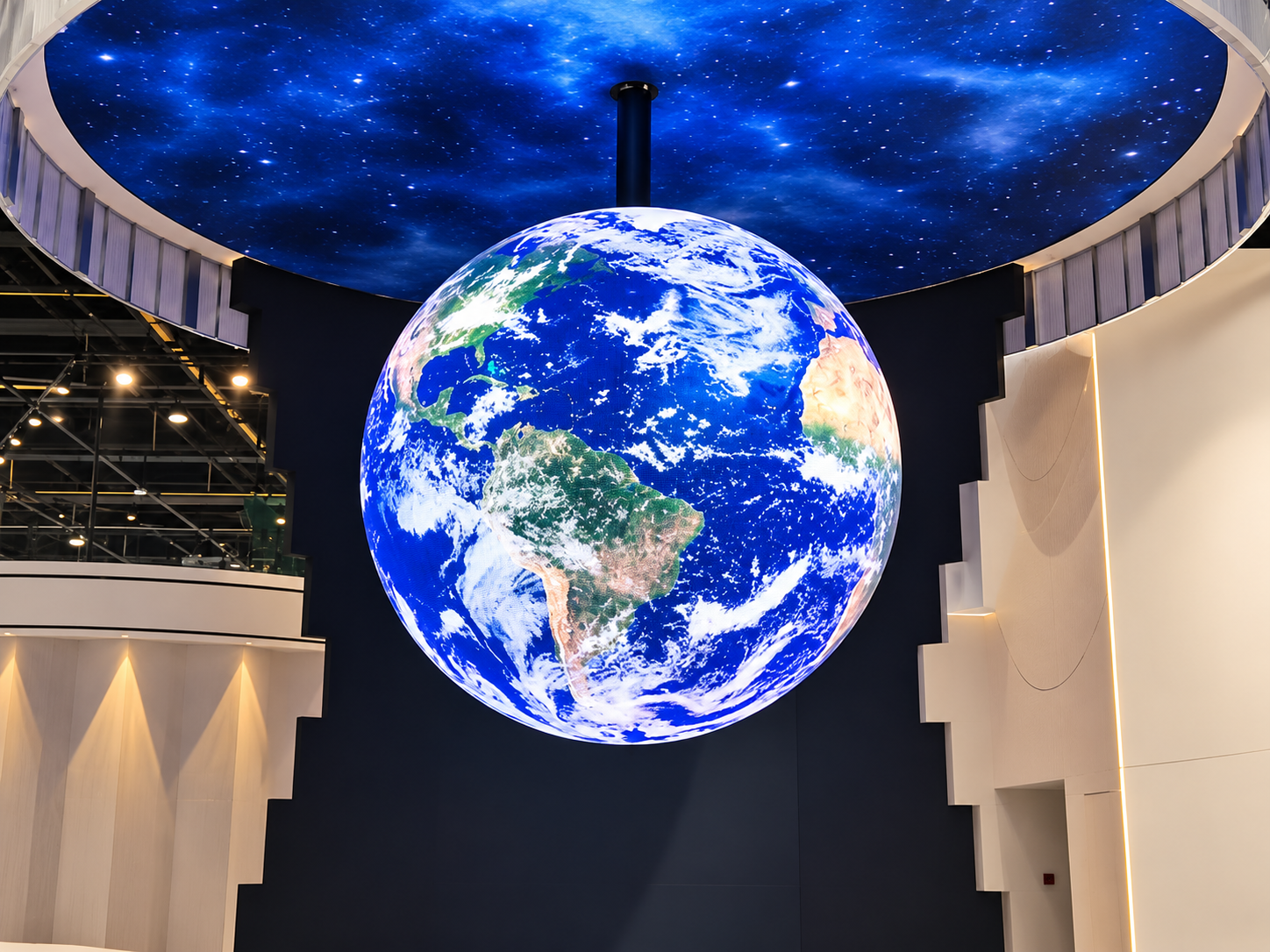
A spherical LED screen can show brand logos, vehicle animations, and promotional videos from different directions. But if the screen is too bright or installed in the wrong position, its light may reflect across car doors, windshields, and hoods.
The goal is not simply to make the screen visible. It is to create an attractive digital display without reducing the visual quality of the vehicles.
Unlike ordinary retail products, cars have large reflective surfaces.
A bright animation on a nearby LED sphere may appear as moving colors across a vehicle's body. These reflections become more noticeable on black, dark blue, and other glossy finishes.
This creates several problems:
Customers may find it difficult to examine the original paint color.
Moving reflections can distract attention from vehicle details.
Bright LED patterns may appear on windshields during interior inspections.
Vehicle photography may capture unwanted colors and light spots.
A car showroom LED display should support the presentation of the vehicles rather than compete with them.
Reflections depend on the relationship between the screen, vehicle, and viewer.
A sphere LED display emits light in many directions because of its curved surface. Some parts of the sphere may face a vehicle even when the main advertising content is directed toward customers.
Three common factors increase reflections.
Screen position: A sphere installed directly above a car hood or beside a glossy door can create strong reflected images.
Excessive brightness: Brightness settings suitable for a shopping mall may be uncomfortable in a showroom with controlled indoor lighting.
Moving content: Rapid color changes, white backgrounds, and flashing animations produce more noticeable reflections than stable visual content.
These factors should be considered together during the design stage.
The first step is to study the showroom layout.
Identify where vehicles will be displayed, where customers normally walk, and which areas offer a clear view of the LED screen.
For many projects, a suspended spherical LED screen works well above reception areas, central walkways, or brand presentation zones.
Avoid positioning the screen directly in the reflection path between a vehicle's glossy surface and a customer's normal viewing position.
Installation height also matters.
A low-hanging sphere may create strong reflections on windshields and upper body panels. Raising it can improve the situation, but the final height should be checked against ceiling space, suspension requirements, and viewing distance.
A simple floor plan and a temporary screen-position test can help determine a suitable location before installation.
Reducing brightness is often helpful, but it should not be the only adjustment.
The screen must remain readable under daytime showroom lighting while avoiding unnecessary light output during evening operations.
A practical design can include different brightness settings for:
Daytime customer visits
Evening showroom operation
Vehicle launches and promotional events
Video content also needs attention.
Large white backgrounds and fast color transitions may create stronger reflections on polished vehicles.
Instead, designers can use darker backgrounds, controlled color transitions, and slower animations.
For example, a car manufacturer may display a rotating vehicle logo against a dark background rather than a full-screen flashing advertisement.
This keeps the indoor sphere LED display attractive without overwhelming the showroom.
A reflection test should be completed before final acceptance.
The most useful method is to place a representative vehicle in its intended showroom position and operate the LED sphere using normal advertising content.
Inspect the vehicle from several customer viewing angles.
Pay particular attention to:
The hood and roof, where overhead reflections are common.
Side doors, especially on dark-colored vehicles.
The windshield, where reflections may affect interior visibility.
Photography positions used for vehicle marketing.
Test different screen brightness levels and video backgrounds.
Record which settings produce noticeable reflections and compare the results.
A useful additional check is to photograph the same vehicle with the LED screen turned off and on, keeping the camera settings unchanged.
This makes it easier to identify reflections caused by the display rather than existing showroom lighting.
Product selection should consider the screen diameter, pixel pitch, control system, and installation structure.
For indoor car showrooms, common options include P1.8, P2, P2.5, and P3 spherical LED displays.
The appropriate pixel pitch depends on how close customers will stand to the screen.
A smaller sphere near a reception desk may need a finer pixel pitch, while a larger suspended sphere viewed from a distance may use a different configuration.
The screen should also support adjustable brightness and stable video playback.
For suspended installations, the supporting frame, ceiling connection, ventilation, and maintenance access must be planned in advance.
A custom sphere LED display can be designed around these requirements instead of forcing the showroom layout to accommodate a standard screen size.
Consider a luxury car showroom with several vehicles arranged around a central reception area.
The project requires a spherical LED screen to display the automotive brand logo, new model introductions, and promotional videos.
Instead of placing the sphere directly above the vehicles, the design positions it over the central walkway.
The display uses a dark background for regular advertising, while brighter animations are reserved for scheduled launch presentations.
During testing, the team checks reflections on black and silver vehicles from the main customer viewing areas.
Brightness and content are adjusted until the screen remains clear without creating distracting reflections across the vehicle surfaces.
This example shows why installation planning and content control are just as important as screen specifications.
Q1: Can a sphere LED display be installed above a car?
Yes, but the position should be tested carefully. The screen must meet structural safety requirements and should not create strong reflections on the vehicle.
Q2: Does lower brightness completely remove reflections?
No. Lower brightness can reduce their intensity, but screen position, vehicle surface angle, and content also affect reflections.
Q3: Which pixel pitch is best for a car showroom?
P1.8, P2, and P2.5 are possible options for close indoor viewing. The final choice depends on screen diameter, viewing distance, and budget.
AILED provides spherical LED displays and customized LED screen solutions for indoor commercial environments.
Our team can assist with screen size selection, pixel pitch, installation structure, control configuration, and project planning.
For automotive showrooms, these decisions should consider both display performance and the appearance of the vehicles.
Explore our Sphere LED Display solutions to find a suitable configuration for your showroom.
Contact AILED to discuss a custom spherical LED screen designed around your showroom layout and presentation requirements.
 Hot News
2026-10-11
2026-10-06
2026-10-05
Copyright © 2025 by Shenzhen Ai Display Technology Co., Ltd - Privacy policy
 EN
EN