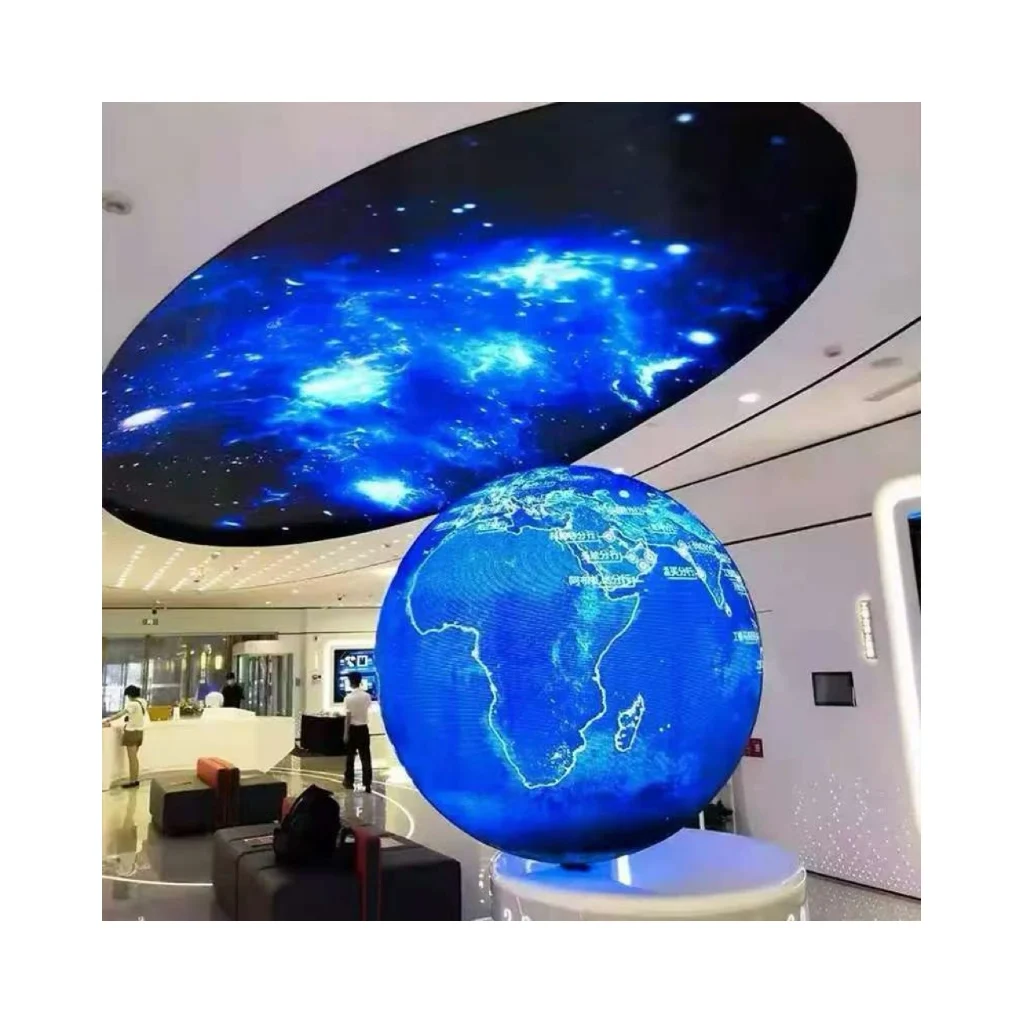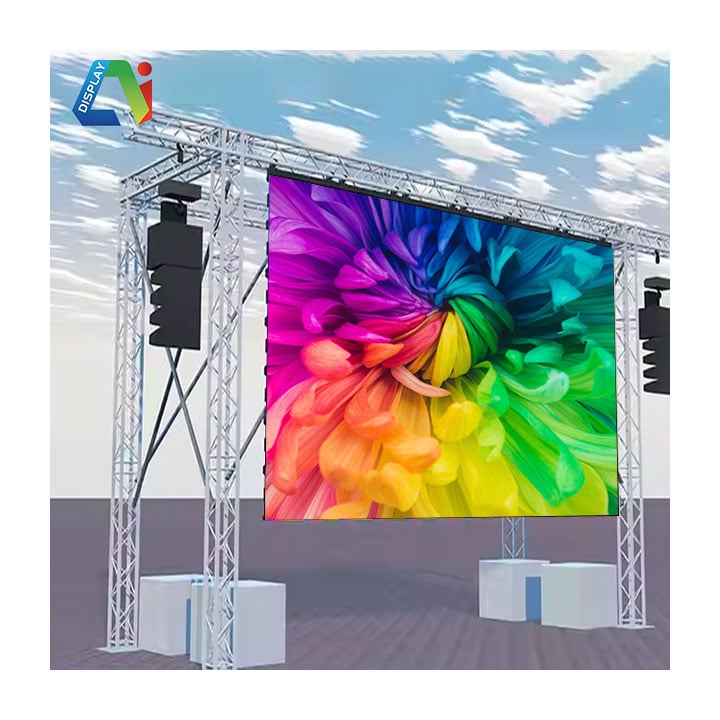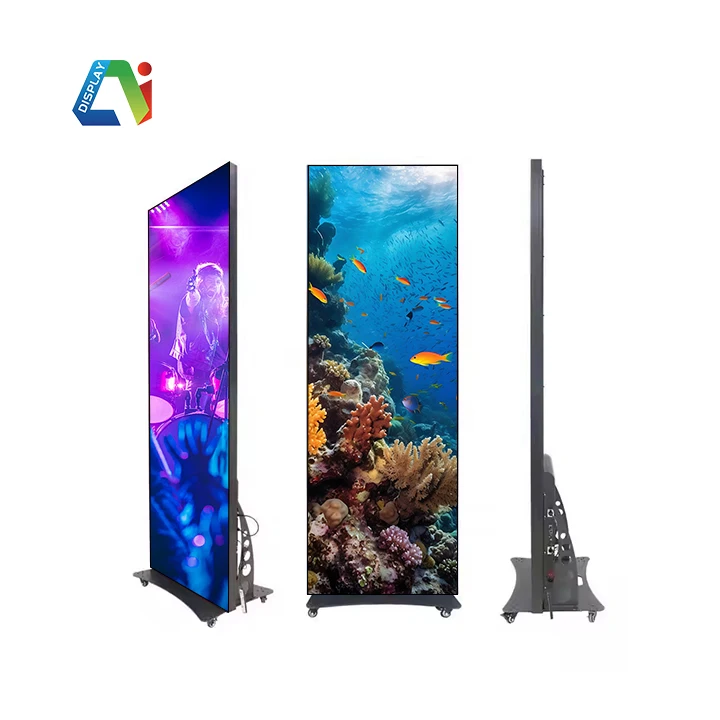
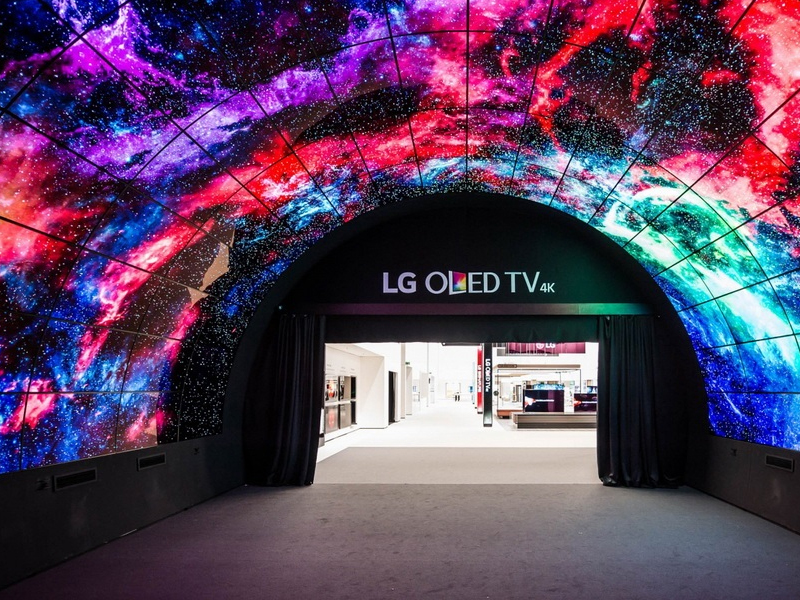
A flexible LED display is an advanced visual technology that can deliver dynamic video content on curved, bent, or irregular surfaces. Unlike conventional flat LED screens, flexible LED displays mount high-density LED pixels onto soft materials such as flexible PCBs and polymer substrates, allowing designers to break free from traditional screen shapes.
As a result, businesses can create curved, circular, cylindrical, and fully customized display structures with minimal visible seams. Combined with high refresh rates, wide color reproduction, and reliable module connections, flexible LED displays provide smooth playback for live broadcasts, complex animations, and real-time rendered content. These capabilities make them an ideal solution for premium digital signage, immersive environments, and XR virtual production.
One of the biggest advantages of flexible LED technology is its ultra-thin and lightweight design. Flexible LED modules are widely used in commercial display projects and typically measure only 10–20 mm in thickness.
Some manufacturers have pushed this even further. For example, our flexible LED modules are only 15 mm thick and weigh less than 0.5 kg per module. This lightweight construction reduces structural load while allowing discreet installation in confined spaces.
Flexible LED panels deliver impressive brightness while consuming relatively little power.
A typical 60-watt flexible LED panel can produce up to 5,200 lumens, providing illumination comparable to a 500-watt incandescent lamp. At the same time, the panel maintains a low operating temperature, usually below 40°C, even during extended operation.
Traditional lighting solutions struggle to match this performance. For example, a halogen fixture may require approximately 300 watts to produce only 2,800 lumens. Furthermore, halogen lamps often reach surface temperatures of 80°C or higher, increasing the risk of damage to ceiling finishes and decorative elements.
Flexible LED technology helps businesses reduce both energy and maintenance expenses.
For curved ceiling installations operating four hours per day, flexible LED panels consume significantly less energy than conventional lighting systems, reducing annual operating costs.
Most flexible LED panels offer a rated lifespan of up to 50,000 hours. Even when operated continuously, they can remain functional for more than 5.7 years. Compared with traditional incandescent lamps, which typically last around 10,000 hours, flexible LEDs provide substantially longer service life.
Since flexible LED panels contain no fragile glass components or filaments, maintenance becomes easier and more cost-effective. If damage occurs, technicians can simply replace the affected module rather than rebuilding the entire ceiling system.
Most modern flexible LED panels support up to 16 million colors and allow users to adjust brightness and color temperature through remote controls or smartphone applications.
With color temperatures ranging from 2700K warm white to 6500K daylight white, users can easily adapt the atmosphere to different activities.
For example:
This flexibility eliminates the need to replace bulbs or install multiple lighting systems.
Traditional decorative lighting often requires extensive wiring, drilling, and ceiling repairs.
Flexible LED panels simplify the entire process. In many cases, installation involves only three steps:
This streamlined approach significantly reduces labor costs and installation time.
Retailers can quickly update seasonal displays, while event organizers can create custom lighting environments within minutes rather than hours.
Through mobile applications, users can instantly adjust brightness levels, switch lighting scenes, or modify color temperatures between 2700K and 6500K.
For example, one jewelry retailer reported noticeably improved diamond brilliance and customer engagement after changing display lighting to a warm 2700K color temperature.
Flexible LED panels are designed to withstand real-world conditions.
Many products feature an IP65 protection rating, providing resistance against dust, moisture, and water splashes. This durability makes them suitable for retail environments, exhibitions, entertainment venues, and temporary event installations.
When a module requires replacement, technicians can remove and replace the individual unit without rewiring the entire display system, minimizing downtime.
Some flexible LED panels weigh as little as 1.8 kg per square meter, making them lighter than many traditional display materials.
Their low weight enables a wide range of installation methods, including:
Designers can therefore create visually striking installations without placing excessive stress on supporting structures.
Many flexible LED systems include built-in microphones or Bluetooth connectivity that allows the display to react to music in real time.
The system analyzes audio frequencies between 20 Hz and 20 kHz and converts sound into dynamic lighting effects using millions of color combinations.
With refresh rates reaching 120 Hz and synchronization accuracy as high as 98%, flexible LED displays can accurately follow fast-paced music, live performances, and interactive entertainment experiences. Traditional RGB lighting systems typically achieve much lower synchronization accuracy.
Most systems can be controlled directly through iOS and Android applications. Once connected, users simply play music and the lighting effects automatically respond to the rhythm and frequency of the audio.
 Hot News
2026-10-21
2026-10-20
2026-10-19
Copyright © 2025 by Shenzhen Ai Display Technology Co., Ltd - Privacy policy
 EN
EN